Zero Retries 0230
2025-11-28 — More Thoughts on a new (Western Hemisphere?) Amateur Radio GEO, 29 MHz DATV, EvoHam.com Digital Voice reference website, Young People Aren’t Interested in Amateur Radio
Zero Retries is an independent newsletter promoting technological innovation in and adjacent to Amateur Radio, and Amateur Radio as (literally) a license to experiment with and learn about radio technology. Radios are computers - with antennas! Now in its fifth year of publication, with 3300+ subscribers.
About Zero Retries
Steve Stroh N8GNJ, Editor
Email - editor@zeroretries.net
On the web: https://www.zeroretries.org/p/zero-retries-0230
Substack says “Too long for email”? YES
⬅️⬅️⬅️ Previous Issue of Zero Retries \ Next Issue of Zero Retries ➡️➡️➡️
In this issue:
- Paid Subscribers Update
- Young People Aren’t Interested in Amateur Radio
- Spotted in Passing…
- Mount Diablo Amateur Radio Club Presentation
- Weekends Are For Amateur Radio!
More Thoughts on a new (Western Hemisphere?) Amateur Radio GEO
- Use Millimeter Wave Bands?
- No Significant Provisions for Data?
- We Probably Don’t Have a Decade
- Half Measures for Some Interesting Amateur Radio GEO Applications?
- 29 MHz DATV
- Looking for Beta Testers – Secure Node-RED Access Without a VPN
- VARA Digipeater Setup and Testing (video)
- EvoHam.com Is Live – And We’re Just Getting Started
Comments Summary From Previous Issue
Permission for Reuse of Zero Retries Content
Comments for This Issue (Redirect to This Issue’s Comments page)
Request To Send
Commentary by Editor Steve Stroh N8GNJ
Paid Subscribers Update
My thanks to Prefers to Remain Anonymous 110 for upgrading from a free subscriber to Zero Retries to a Founding Member Subscriber 0020 this past week!
PRTA 110 also included this nice message:
Seems like a worthwhile cause, without apparent influence from vested interests.
My thanks to Prefers to Remain Anonymous 111 for upgrading from a free subscriber to Zero Retries to Founding Member Subscriber 0021 this past week!
My thanks to Prefers to Remain Anonymous 58 for renewing as an Annual Paid Subscriber to Zero Retries this past week!
Financial support from Zero Retries readers is a significant vote of support for the continued publication of Zero Retries.
Young People Aren’t Interested in Amateur Radio
I was asked to comment on an essay that began with the title above. Rather than critiquing the essay, I replied:
I think that the phrase “Young people aren’t interested in Amateur Radio” is incomplete.
I think a more accurate phrase would be “Young people aren’t very interested in legacy Amateur Radio activities.”
Legacy Amateur Radio:Mostly has the public perception of Amateur Radio from television series Last Man Standing, ALF, and even The Munsters. From those popular cultural references, Amateur Radio is seen as a quaint, retro-tech activity with almost no relevance in the era of broadband connected pocket supercomputers, broadband everywhere, and the prevalence of conversations via text rather than verbal.Is mostly talking / casual conversation or contesting or DXing.Is mostly taking place on HF (too often, pejoratively characterized as “Real Ham Radio”).Mostly does not involve digital or data modes.When information about digital or data modes are sought out, the most common result is legacy packet radio circa early 1980s - 1200 bps AFSK (slow, failure prone, doesn’t scale) including legacy APRS.Are mostly operational activities rather than experimental or technical activities.Many interesting aspects of radio experimentation in this era such as Meshtastic are not (formally) part of Amateur Radio.Amateur Radio emergency communications don’t reflect the existence and rapidly increasing usage of modern robust communications capabilities such FirstNET, Iridium, and Starlink (especially the very portable Starlink Mini).
Thus, agreed, most “young people” aren’t interested in Amateur Radio as reflected above.
It’s not easy for “young people” to discover aspects of Amateur Radio that are relevant and interesting to them, such as:Advanced data modes such as AREDN and New Packet Radio that enable high speed data communications networks independent of the Internet, cellular, and satellite communications.Open source activities such as FreeDV / RADE, M17 Project, and the very exciting LinHT open source Software Defined Radio in the form of a “walkie talkie”.How using GNU Radio with an Amateur Radio license enables new and exciting different radio technology to be experimented with (over wide areas, in VHF / UHF spectrum, with higher power levels than unlicensed spectrum).Demonstrating interest and capability in experimenting with radio technology in Amateur Radio can help establish credibility when competing for jobs in industries (such as defense, telecommunications, cybersecurity) that involve radio technology.
The trick (poor terminology, I know) to get “young people” interested in Amateur Radio is to not to promote the same old, same old legacy Amateur Radio activities that are irrelevant to them. Instead, promote aspects of Amateur Radio that are modern in the 21st century and relevant to them (and society).
We’re getting better at the latter, but we really have a long way to go.
Completely independently, there was this comment by Chuck Till K4RGN posted this week regarding Zero Retries 0229:
The majority of people completing my club’s license classes and passing the exams are not particularly interested in HF CW and SSB. They’re only mildly interested in VHF/UHF analog FM.
I’m not saying that operations from the 1950s-1970s will go away entirely, but it’s going to be a monotonically decreasing percentage of the hobby -- especially as the Baby Boomers die out.
Stick to your target.
My reply:
The majority of Amateur Radio Operators in the 2020s are captive to their (incomplete, in my opinion) worldview that what Amateur Radio IS, is mostly HF, CW+SSB, with a sprinkling of VHF / UHF voice (FM + Digital), and the very, very occasional “interesting” mode such as satellite, EME, microwave DX, and a tiny sliver of data such as APRS or Winlink.
For some time, I thought what was needed to gain more “mindshare” about Zero Retries Interesting areas of interest within Amateur Radio was to expose them to it. But now, in the fifth year of publishing Zero Retries, I’ve come to realize that such exposure results in perhaps 3% “oh, I didn’t know about that - sounds interesting” and 97% “oh, that’s not really Amateur Radio / I’m not interested in that at all”.
Thus I’m no longer attempting “promotion of Zero Retries Interesting subjects” to general Amateur Radio audiences. I now do so only on request groups that request such a presentation because they know of Zero Retries and related subjects such as LinHT. Instead I’ll be promoting Zero Retries Interesting subjects to potential NewTechHams audiences such as the local annual Linux conference.
In a conversation I had this week, I was trying to explain both facets of Amateur Radio and I think it boils down to a dichotomy - Legacy Amateur Radio (basically the same Amateur Radio activities that were relevant in the 1970s) and the NewTechHams and OldTechHams that I mostly write for here in Zero Retries. There is some middle ground of folks that enjoy both “Legacy” and “TechHams”, but that crossover audience is pretty small.
Speaking solely for myself, I’ve come to the conclusion that I no longer think that “exposing legacy Amateur Radio” to Zero Retries Interesting topics of interest to NewTechHams (and again, OldTechHams) is an effective use of time, energy, funds, and resources. An example is Hamvention - my primary takeaway from Hamvention, including attending Hamvention 2025, is that Hamvention is almost entirely a celebration of legacy Amateur Radio (admittedly, a big celebration) with only occasional new technology Zero Retries Interesting topics showcased there. One example from Hamvention 2025 was the FlexRadio Aurora. But that’s all the “NewTech” that readily comes to mind from Hamvention 20251.
Thus, I think that promoting Zero Retries Interesting topics, projects, and activities mostly to NewTechHams, can only be effective when directed into specialized venues that are (at least potentially) relevant to NewTechHams, such as:
- Text publications such as Zero Retries, Random Wire Newsletter, The Communicator newsletterzine,
- Conferences such as Zero Retries Digital Conference, DEF CON conference, GNU Radio Conference,
- Tech-focused YouTube channels such as TechMinds and saveitforparts,
- Tech focused podcasts such as Ham Radio Workbench
- Future focused technical organizations such as ARDC.
Spotted in Passing…
Loïc Féjoz F4JXQ in his QRZ.com profile:
Favorite source of information: https://www.zeroretries.org/
Thank you F4JXQ!
Mount Diablo Amateur Radio Club Presentation
Tina and I had a good time talking to MDARC last Friday about Zero Retries, ZRDC, our impression of MDARC’s Pacificon 2025 conference, LinHT, and other topics. I haven’t yet updated the slide deck with URLs and other references, but I will do so soon, and make it available here in Zero Retries and to MDARC for their archive of the presentation.
Weekends Are For Amateur Radio!
Nothing special in mind in N8GNJ and Zero Retries Labs this weekend other than recovering from having piled up many leftover projects, and of course, a great Thanksgiving meal(s) and hosting some good friends for an extended visit.
Have a great weekend, all of you co-conspirators in Zero Retries Interesting Amateur Radio activities!
Steve N8GNJ
More Thoughts on a new (Western Hemisphere?) Amateur Radio GEO
By Steve Stroh N8GNJ
A comment on Zero Retries 0229 by Loïc Féjoz F4JXQ directed me to AMSAT-DL’s FutureGEO proposals repository of responses to AMSAT-DL’s request for proposals (inputs regarding FutureGEO).
Use Millimeter Wave Bands?
Reading through some of the proposals, I’m surprised that it’s being seriously considered to use millimeter wave bands like 77 GHz for an Amateur Radio satellite or payload in Geosynchronous Earth Orbit (GEO), and thus accessing a new Amateur Radio GEO payload should be more challenging to access than the use of 2.4 GHz uplink and 10 GHz downlink used by the QO-100 Amateur Radio payload at GEO above the Eastern hemisphere.
On paper (the proposals), it probably sounds good that Amateur Radio should use its microwave spectrum. But consider… the wavelength of 77 GHz is 3.9 mm / 0.15 inches. Thus imagine the precision required to hit a GEO satellite (perhaps a “micro GEO” satellite) antenna at a range of 35,786 km from the ground, or a roof, or an apartment balcony. Just a mild gust of wind could easily move the dish antenna out of alignment with the satellite.
Thus, to me, the use of millimeter wave bands like 77 GHz for accessing a GEO is a total non starter. Such a bleeding edge system could only possibly appeal to the hardest core microwave experimenters who can build a very, very robust ground station to build an effective 77 GHz ground station.
For the rest of us, it’s challenging enough, but practical enough, to imagine using 2.4 GHz or 5 GHz as an uplink, and 10 GHz as a downlink to access a GEO payload. Just a basic comparison with the wavelength (and resulting dish, and pointing accuracy required for 77 GHz (3.9 mm / 0.15 inches). Per ChatGPT:
- 2.4 GHz wavelength: ~ 122 mm / 4.8 inches
- 5.5 GHz wavelength: ~ 55 mm / 2.2 inches
- 10.5 GHz wavelength: 29 mm / 1.1 inches
Accuracy to GEO with an Amateur Radio built ground station antenna with those wavelengths seems reasonable to me, especially compared to accuracy required at 77 GHz.
No Significant Provisions for Data?
The other surprising / disappointing observation in reading through the proposals is that there’s a near total exclusion of digital / data modes for proposed new Amateur Radio GEO satellites.
Huh? Do the individuals creating such proposals not send emails every day? Do they not text multiple times per day? Do they not access the web multiple times per day?
The proposals seem to imagine that folks using a new Amateur Radio GEO satellite mostly want mostly to chat (voice)? I really don’t think so - see the storylet Young People Aren’t Interested in Amateur Radio in Request to Send above.
To me, the primary utility of an Amateur Radio GEO satellite or payload for the Western Hemisphere is that it can be a data communications system (as in, transporting any digital mode - voice, video, data, text chat…) that can provide a reliable link, using Amateur Radio spectrum, between any Amateur Radio Operator / multiple Amateur Radio Operators in North America. Or, depending on the specific GEO orbital slot chosen (or mandated by sharing offered), the Eastern portion of North and South America and Western Europe and Western Africa using Amateur Radio spectrum.
Amateur Radio is rapidly losing relevance in society.
Ultimately, amateur radio must prove that it is useful for society.
Dr. Karl Meinzer DJ4ZC.
Doubly so for use of the precious resource of a satellite operating at a precious orbital slot at GEO.
We Probably Don't Have a Decade
In my opinion, Amateur Radio doesn’t have a window of a decade to wait / plan / execute for an Amateur Radio GEO for the Western Hemisphere. In my (highly unqualified, regarding building and getting satellites into orbit) opinion, the window of opportunity for an additional Amateur Radio satellite / payload at GEO for the Western Hemisphere will have closed within five years. By 2031 or so, Amateur Radio of that era won’t want, or need, an Amateur Radio GEO.
The enemies of competition for the utility / use case of a new Amateur Radio GEO within the NewTechHams that might potentially be interested in using (and building a ground station for) a new Amateur Radio GEO are:
- Internet, including increasingly capable and matter of fact, and easy to use Amateur Radio Over Internet (AORI) systems. AROI works worldwide, including between any two Amateur Radio Operators / groups of Amateur Radio Operators - like a GEO. An example of this trend is the SharkRF m1ke unit and its future competitors. This is a fully Amateur Radio unit, but its access system is conventional Wi-Fi and Internet.
- Mobile Networks, including Push to Talk (PTT) services over mobile, both apps on phones and dedicated devices that resemble portable Amateur Radio VHF / UHF radios. PTT over Mobile works worldwide, including any two Amateur Radio Operators / groups of Amateur Radio Operators - like a GEO.
- Starlink, especially Starlink Mini. Starlink Mini is inexpensive (retail is ~$220) and Starlink can be used in “Standby” mode for $5/month for unlimited use 500 kbps. Starlink works worldwide, including any two Amateur Radio Operators / groups of Amateur Radio Operators - like a GEO.
- Combination of all of the above. Apple offers text messaging and other basic communications with its modern iPhones. Starlink and T-Mobile offer text messaging and other basic communications in a partnership that Starlink satellites use T-Mobile spectrum from Low Earth Orbit. Starlink just recently acquired its own cellular spectrum that may enable Starlink to become another mobile carrier… worldwide via its Starlink satellite constellation (primary) and partner with terrestrial mobile networks (secondary).
Instead of timelines that potentially stretch out a decade (or more), there needs to be a sense of urgency to get an Amateur Radio GEO into orbit in a matter of years. If not, Amateur Radio will have to accept that the window for an additional Amateur Radio GEO satellite / payload has closed and that the options above are more practical, more cost-effective, more usable, and generally more interesting, than an Amateur Radio GEO satellite / payload.
Half Measures for Some Interesting Amateur Radio GEO Applications?
Instead of a full Amateur Radio GEO satellite / payload, there may be some utility / interest in using an existing GEO satellite transponder2. The following presupposes:
- Some entity would pay the fees required for Amateur Radio to be able to use an entire transponder,
- Uplink to the transponder would only be via conventional (commercial) uplink transmitter with only controlled, authorized (licensed) commercial uplink transmitters.
- Receivers would be inexpensive and relatively easy such as direct broadcast satellite antennas and receiver units (such as Dish Network / DIRECTV).
Imagine what Amateur Radio could do with a (6 MHz) transponder on a GEO satellite positioned for optimum coverage of the Western Hemisphere:
- Partition the 6 MHz of transponder bandwidth to allocate 1 or 2 MHz to be used for Digital Amateur Television. The uplinked video content could consist of live presentations (what we do now with Zoom teleconferences such as RATPAC, now), recorded video presentations (what we do now with YouTube videos such as AmateurLogic.TV), and various feeds from Digital Amateur Radio Television (DATV) repeaters such as the W0BTV Digital Amateur Television Repeater in the Boulder, Colorado, USA area (that can only be received if you live in that area).
- File Flood Protocol - stream files, block by block, with Forward Error Correction similar to flamp (Fast Light Amateur Multicast Protocol) and Othernet (formerly, Outernet). Any file that might be of use to Amateur Radio could be broadcast - directories of repeaters, open source maps, global list of Winlink Radio Message Servers (RMS), global callsign directory (perhaps once per week), global directory of new Amateur Radio articles, YouTube videos, podcasts, etc.
- Live stream of dynamic data such as Low Earth Orbit (LEO) Amateur Radio satellite orbit information, APRS, perhaps even audio streams (I don’t know how much bandwidth these occupy) of various, selected, perhaps all (?)Internet talk groups, selected portions of Amateur Radio HF bands, rotating image displays such as shack photos, QSL cards, etc.
- Aggregation of all available Amateur Radio bulletins - Amateur Radio Newsline, ARRL, Amateur Radio weekly,
The basic idea is to leverage what can be done on an experimental basis for Amateur Radio Operators getting experience with GEO satellites…
in the near term - the next couple of years.
Commence the howls of “but, that’s not Amateur Radio”.
Correct. Thanks for pointing that out. But as counterpoints…
- Amateur Radio over Internet (AROI) systems (Internet talk groups) use Internet in whole or in part. The transport portion of those systems is not Amateur Radio, but thousands of folks are using those services to have fun and experiment with radio technology.
- General Mobile Radio Service (GMRS), Citizens Band (CB), and Family Radio Service (FRS) also aren’t Amateur Radio, but thousands of folks are using those services to have fun and experiment with radio technology.
- Meshtastic, MeshCore, and Reticulum also aren’t Amateur Radio, but thousands of folks are using those systems to have fun and experiment with radio technology.
- There are numerous microwave networks using unlicensed spectrum at 5 GHz that are operated as hobby / not-for-profit networks that aren’t Amateur Radio, but thousands of folks are using those networks to have fun and experiment with radio technology.
- Repeater networks often rely on cellular Internet to link individual repeaters into repeater networks. Cellular networks aren’t Amateur Radio, but thousands of folks are using those repeater networks to have fun and experiment with radio technology.
- Increasingly Starlink is being used for interconnecting geographically separated Amateur Radio systems such as tunnels between otherwise disconnected AREDN networks. Starlink isn’t Amateur Radio, but thousands of folks are using those AREDN networks (partially linked by Starlink) to have fun and experiment with radio technology.
All of the above systems and networks have some overt, partial, or potential overlap with Amateur Radio. I’m sure the common thread is clear… using those systems or networks to have fun and experiment with radio technology.
Using a commercial GEO satellite transponder for Amateur Radio experimentation is no different from those examples. It would be used to have fun and experiment with radio technology.
What I think Amateur Radio needs to do is to embrace a bias for action about an Amateur Radio GEO satellite / payload for the Western Hemisphere in the short term - no more than five years. Or else accept that the window for another Amateur Radio GEO has closed, and move on to other activities / projects that actually can be implemented.
Given that there currently does not seem to be any sense of urgency by Amateur Radio space-related organizations to attempt another Amateur Radio GEO, there doesn’t seem to be any harm in forming a new organization to attempt another Amateur Radio GEO with a sense of urgency to complete such a project in no more than than five years.
ZR > BEACON
By Steve Stroh N8GNJ
Short mentions of Zero Retries Interesting items.
29 MHz DATV
John Desmond EI7GL via email:
Thanks for your weekly Zero Retries newsletter, I always find it a good read on a Saturday morning.
I think the whole ethos of promoting digital communications is exactly what is needed in amateur radio and you’re one of few people doing that.
I just put up a post on my blog about DATV signals from Belgium being received in Greece.
Digital Amateur TV experiment between Belgium and Greece on the 29 MHz band - Nov 2025... https://ei7gl.blogspot.com/2025/11/digital-amateur-tv-experiment-between.html
Frans, ON4VVV is looking for interested parties in the USA who might be willing to try and receive his DATV signal on 29 MHz. I was thinking there might be someone in your Zero Retries audience?
My Radio Blog is https://ei7gl.blogspot.com/
I’ve fallen behind on my Amateur Radio RSS feeds, thus I’m grateful that EI7GL reached out via email about this project. EI7GL’s blog is one of many that offer Zero Retries Interesting information. Amateur Radio, writ large, has an annoying bias that “X just can’t be done, or Y just isn’t practical"… which alternately amuses or annoys the folks like ON4VVV that are doing such things that “can’t be done or aren’t practical”.
Looking for Beta Testers – Secure Node-RED Access Without a VPN
Dave Ginsberg N3BKV via email:
I’m working on a remote Node-RED controlled station for a large club and I needed a simple, secure access solution that doesn’t require members to use a VPN. To solve this, I’ve put together a RPi installation script that deploys a complete access stack using widely supported, off-the-shelf components: Let’s Encrypt, Traefik for TLS termination and Authelia for authentication.
With this setup, members simply visit a webpage, authenticate and are routed directly into the Node-RED dashboard, there are no VPN clients, no port forwarding and minimal maintenance for admins.
I’m looking for feedback from the community and a few beta testers before rolling it out to the club. If this sounds useful for your station or a similar application, please take a look and let me know what you think: https://github.com/n3bkv/44Net-Secure-Portal.
I hope that some Zero Retries readers can assist N3BKV.
VARA Digipeater Setup and Testing (video)
Joe Hamelin W7COM via email:
Good walkthrough.
KK4ODA Ham Radio YouTube Channel
Description:
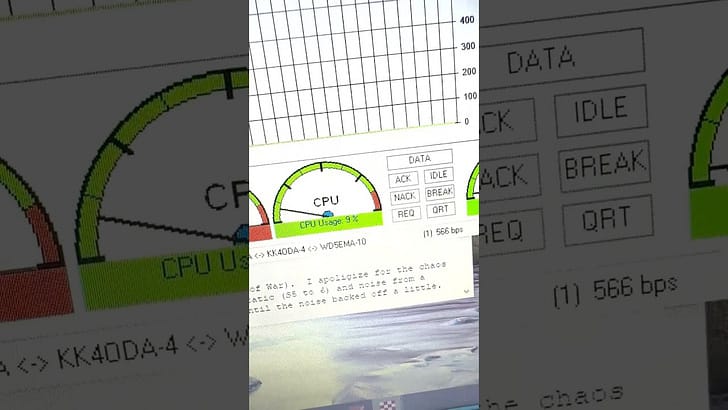
This video demonstrates how to set up a VARA FM digipeater and use it to connect to a remote VARA FM gateway that would otherwise be unreachable.