Zero Retries 0227
2025-11-07 — A Remarkable Amateur Radio Presentation - LinHT at OpenAlt 2025 by Vlastimil Slinták OK5VAS, Retreating from Repurposing Existing Repeaters, Stixs Radio, Vibraphone, FreakWAN
Zero Retries is an independent newsletter promoting technological innovation in and adjacent to Amateur Radio, and Amateur Radio as (literally) a license to experiment with and learn about radio technology. Radios are computers - with antennas! Now in its fifth year of publication, with 3200+ subscribers.
About Zero Retries
Steve Stroh N8GNJ, Editor
Email - editor@zeroretries.net
On the web: https://www.zeroretries.org/p/zero-retries-0227
Substack says “Too long for email”? YES
⬅️⬅️⬅️ Previous Issue of Zero Retries \ Next Issue of Zero Retries ➡️➡️➡️
In this issue:
- Paid Subscribers Update
- Substack Newsletters Internal Links Seem to be Working Again
- Nice Mention of Zero Retries Article in Amateur Radio Newsline
- AnySignal - Any… Signal…
- Building Up “Static” Articles for Easier Reference
- Features Versus Products
- Weekends Are For Amateur Radio!
Starlink Made Me An Offer I Couldn’t Refuse
A Remarkable Amateur Radio Presentation - LinHT at OpenAlt 2025 by Vlastimil Slinták OK5VAS
Retreating from Repurposing Existing Repeaters
- Brief Update on KK7NQN Transcriber Service Node
- Introducing the Stixs Radio
- FSF Announces Librephone Project
- FreakWAN
- Matchbox APRS
- W1BTR Big Time Radio - Radio Programming Services
Comments Summary From Previous Issue
Permission for Reuse of Zero Retries Content
Comments for This Issue (Redirect to This Issue’s Comments page)
Request To Send
Commentary by Editor Steve Stroh N8GNJ
Paid Subscribers Update
My thanks to Prefers to Remain Anonymous 17 for renewing as an Annual Paid Subscriber to Zero Retries this past week - 3rd year!
My thanks to Prefers to Remain Anonymous 105 for upgrading from a free subscriber to Zero Retries to an Annual Paid Subscriber this past week!
Financial support from Zero Retries readers is a significant vote of support for the continued publication of Zero Retries.
Substack Newsletters Internal Links Seem to be Working Again
For a few months, clicking on an internal link to this (and other) Substack newsletters seemed to redirected to the newsletter, not individual stories (internal links) in the newsletter. Now that feature seems to be working again, it’s pretty useful to click and go right to the story instead of having to scan through the entire issue to find the story of interest. Thus, I’ll restart embedding internal links into the Fable of Contents1 of each issue of Zero Retries. It’s a bit tedious, and thus only worth doing if it’s useful and working. Please advise me if internal links don’t, or stop, working.
Nice Mention of Zero Retries Article in Amateur Radio Newsline
It’s always fun (and humbling, given AR Newsline’s stature within Amateur Radio) when an article or mention in Zero Retries gets picked up by Amateur Radio Newsline. In this case, Western Washington University Develops Electrical and Computer Engineering Department in Zero Retries 0225, which became:
Amateur Radio Newsline Report 2505 for Friday, October 31st, 2025.
From the script of that issue:
HAM TO CHAIR COLLEGE’S NEW ELECTRICAL AND COMPUTER ENGINEERING DEPARTMENT
STEPHEN/ANCHOR: Recognizing industry growth and student demand, a university in northern Washington State has developed a full Electrical and Computer Engineering Department on its campus - and it’s being chaired by an amateur radio operator. We have those details from George Zafiropoulos, KJ6VU.
GEORGE: Starting in the fall of 2026, students at Western Washington University will be able to enroll in programs in the new Electrical and Computer Engineering Department and to pursue studies in the school’s first engineering graduate program. The courses were previously housed within the school’s Department of Engineering and Design.
The Zero Retries Newsletter, which reports the development in its latest edition, said that Janelle Leger, dean of the College of Science and Engineering, credited student and industry demand as the primary reasons for creation of a new department. She said the move is being made with support from the state to create the degree programs. Majors will select from four programs, which include wireless networking and signal processing focus, as well as AI, electronics and energy.
The professor chairing the new department is Andy Klein. On the university website, the professor writes that having a standalone department will pave the way to creating partnerships and internships with companies and generate more internships for students. Andy Klein is an amateur radio operator who received the callsign KG7WFT in July.
This is George Zafiropoulos, KJ6VU.
(STEVE STROH, N8GNJ, ZERO RETRIES NEWSLETTER; WESTERN WASHINGTON STATE UNIVERSITY)
Thanks Amateur Radio Newsline! It’s always a pleasure to get “picked up”.
AnySignal - Any… Signal…
(Not related to Amateur Radio - just one of my periodic excursions into what’s possible with radio technology in the 2020s and beyond.)
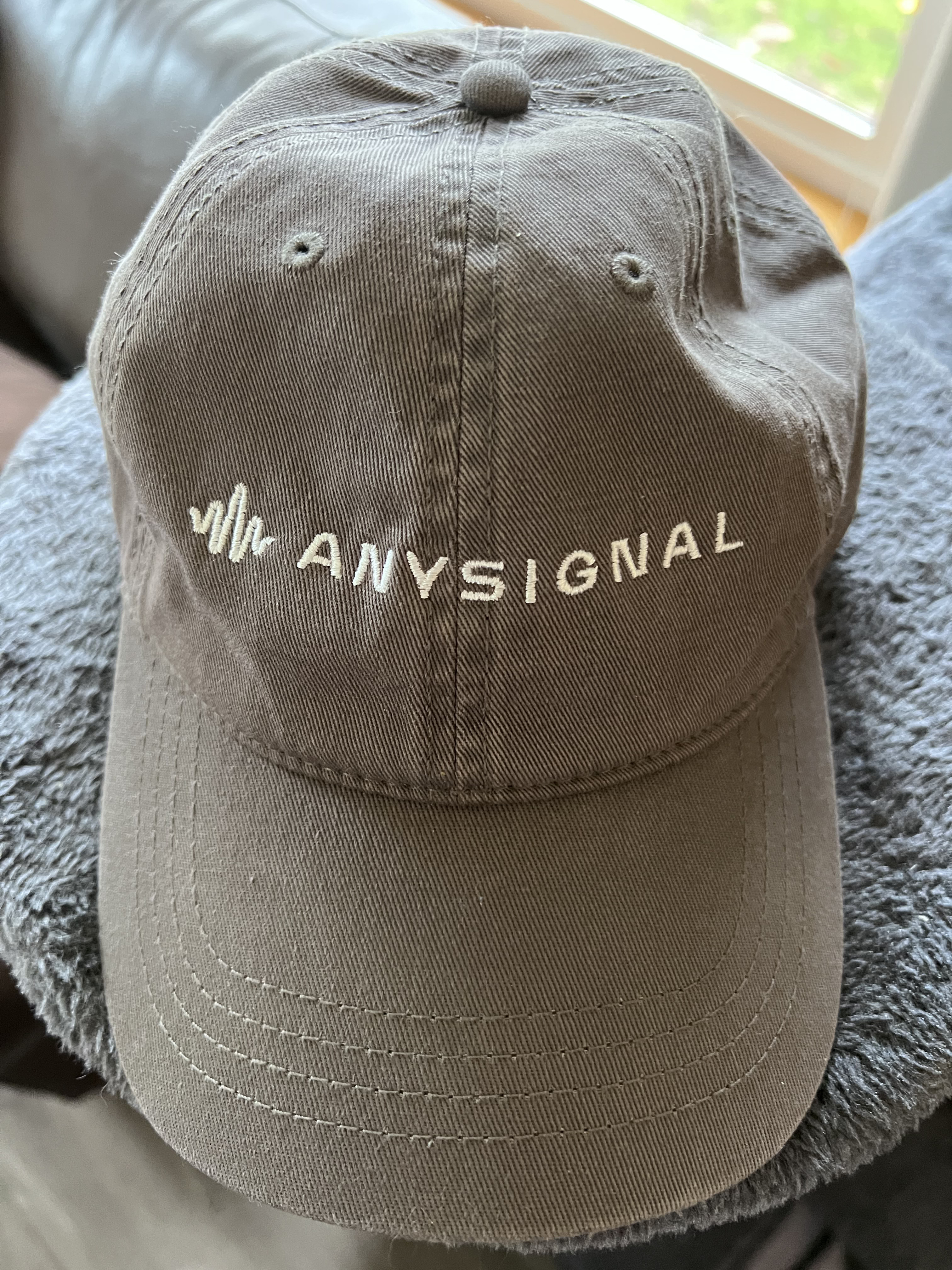
One of the savviest bits of promotion at GNU Radio Conference 2025 were the hats (shown above) given away by the company AnySignal. A handful of hats would appear on an otherwise empty table, several times per day . I now have a few of these. They’re nice quality hats, with just the company logo on them:

Of course, grabbing a nice hat compels one to look up what the hat provider is all about. AnySignal’s2 capabilities cross a number of what used to be silos of radio technology - Space Communications, Autonomous Systems (drones), Electronic Warfare, and RADAR. Terrestrial communications isn’t mentioned, which surprises me.
Given the size of their announced investments, AnySignal is a startup. It has a lot of the right ideas:
You can’t see the radio frequency spectrum. You can’t touch it. But it’s holding the modern world together: your GPS, your flight home, your satellite internet, even your national security. And it’s breaking under the weight of rising complexity, adversarial threats, and outdated tools.
I would add regulatory paradigms based on poor selectivity, easily overwhelmed receiver technology of the 1930s that partitioned portions of spectrum for specific uses and users.
Governments and companies are waking up to a silent crisis: we are running out of spectrum and running out of time. This can’t be solved by throwing money at legacy hardware or auctioning more spectrum. It demands a new approach — one that reimagines the entire RF stack.
Other than we have run out of spectrum - it’s all been allocated… yep!
The 2020s are going to be figuring out how new radio systems tiptoe around (literally) the current regulatory patchwork quilt of antique radio regulations and legacy systems. The companies that leverage these new radio technologies to figure that out are going to do very well.
That’s what AnySignal is. It’s our version of “getting the band back together.” It’s the Ocean’s 11 moment — assembling a crew of engineers, operators, and systems thinkers who can cut through noise and just build.
We didn’t just want smart people — we wanted builders. People who treat constraints as design tools, not excuses. People who ship.
I’ll guess that a lot of the folks I’ve highlighted here in Zero Retries that are creating new systems are the kind of folks AnySignal would welcome… at least those who already live in or willing to relocate to the Los Angeles, California area. AnySignal is hiring folks with radio technology capabilities.
It’s a delicious, if brief fantasy to imagine what an AnySignal Amateur Radio club could accomplish with that kind of radio technology talent wanting to “have some fun with radio”. I bet they could come up with a SuperPeater in a weekend hacking session.
But my main point of admiration of AnySignal is that whoever came up with that brand name for the company, and that simple logo… was brilliant in choosing that name - Any… Signal… If the name AnySignal wasn’t claimed as a company name (and undoubtedly ably defended against unauthorized use)… I’d be tempted to start using that concatenation of those two words to describe this new era of radio technology. As in any signal we can imagine (and new ones, that we cannot, yet, imagine) are possible.
That’s the era we’re in now with radio technology - Any Signal we can imagine, we can implement.
Building Up “Static” Articles for Easier Reference
I’ve been working on compiling static pages of recurring themes in Zero Retries. Such pages are listed in the Zero Retries Guides sub-page, which is linked at the top of the main Zero Retries page.
In Zero Retries articles I often re-discuss various projects, themes, technologies, ideas, etc. and doing a single reference to those single-topic pages are a lot easier for Zero Retries readers to get up to speed on a topic, instead of backtracking through previous issues of Zero Retries. One recent example is SuperPeater.
Compiling these pages also has the added benefit to me of consolidating these thoughts and previous articles as preparation for my book in progress, The Zero Retries Guide to Amateur Radio in the 21st Century. Each of those articles will likely end up as a chapter in the book.
Features Versus Products
One can learn a lot by listening to smart people (when they’re being smart, not lapsing into arrogance and self-aggrandizement). One of the smartest people I’ve learned things from was Steve Jobs.
One of Job’s gifts was being able to see beyond existing paradigms to imagine what was possible… and why it should be possible. That’s how we got the iPhone (and Android) instead of evolutions of the then existing paradigms of mobile devices such as Blackberry and stylus-based handheld computers.
In commenting on non-Apple products, Jobs said a number of times “That’s a feature, not a product”. One of the “not-a-products” he was referring to was Dropbox, with file-sharing / file synchronization capabilities that would eventually be incorporated into Apple iCloud…. which took a while to get right. A hardware example was dialup modems, and add-in Ethernet cards, and then Wi-Fi adapters, all of which just became features rather than products.
We’re already seeing this happen in Amateur Radio. A number of newer radios have audio interfaces integrated into them, so no external TNC or audio interface is needed. Hopefully we’ll start seeing FreeDV RADE integrated into the more advanced Amateur Radios, so it won’t be necessary to have RADE versions of the ezDV.
Now that we’re on the cusp of creating highly versatile devices for Amateur Radio such as the LinHT and perhaps the Stixs Radio, in evaluating projects, I think it’s a useful framework for future projects to do an basic reality check:
Is this project going to ultimately be a product, or is it destined to become a feature”?
I hope a lot of folks decide for the latter and put their prodigious energies and talent into making projects like the LinHT increasingly useful with their ideas.
Weekends Are For Amateur Radio!
But sometimes weekends are for digging out troublesome stumps. Fortunately, there are now a lot of great tools for dealing with stumps, many of them powered by powerful, portable batteries. Alternating with steel wedges, axes, and hammers.
Have a great weekend, all of you co-conspirators in Zero Retries Interesting Amateur Radio activities!
Steve N8GNJ
Starlink Made Me An Offer I Couldn’t Refuse
By Steve Stroh N8GNJ
I was offered the indefinite use of a Starlink Mini unit, for a mere $5 / month, and I happily accepted. When not being used itinerantly, this unit will provide dedicated, basic Internet connectivity for Amateur Radio systems in N8GNJ / Zero Retries Labs.
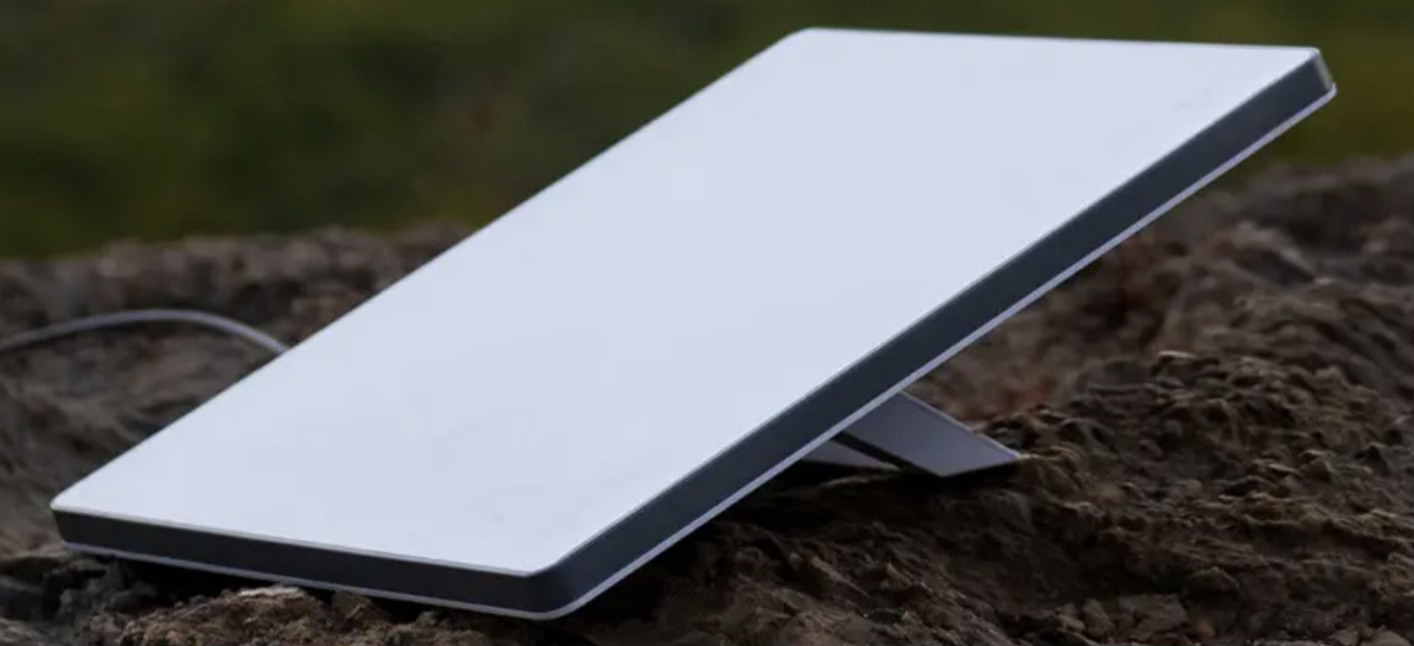
I received this email from Starlink this week:
Mini Kit now included with your Residential plan
As a thank you for being a loyal Residential customer, you’ll receive a $0 Starlink Mini—so you can take the same fast, reliable internet you use at home anywhere you go. Click below to redeem and keep reading for more details.
How it WorksFree Mini: You’ll receive a Starlink Mini for $0, provided as a rental bundled with your active Residential plan.Built-in WiFi: Mini has an integrated router, so you get online without extra equipment.Always Ready: Upon arrival, your Mini will be on Standby Mode for $5/mo, which includes unlimited low-speed data for backup and emergency messaging.50% Off Roam: When you are ready to travel, you can switch anytime to high-speed Roam plans at half the price.Travel anywhere: Bring your Mini on road trips, camping, or boating across 150+ countries, territories, and markets.
Note: Redemption guaranteed through November 17, 2025. By redeeming, you agree to pay a monthly recurring fee of $5/mo for Standby Mode or upgrade to Roam. If you cancel your Residential service plan or the service plan on your Mini, the Mini must be returned or its cost will be charged to your payment method. Normal wear and tear is expected upon return.
The “unlimited low-speed data is 500 kbps which isn’t exactly broadband speeds… but it’s $5 / month.
If that proves to be inadequate, apparently I can upgrade to the:
ROAM 50GB
Best for infrequent and individual travel with low usage
$50/MO
But with this plan, that’s not $50 / month, it’s $25 / month.
The caveats:
Again, for the $5 / month basic charge, at 500 kbps, I won’t be doing
anymuch3 video streaming.I’m renting the Starlink Mini. If I terminate my Starlink residential service (which I’m using via my purchased Starlink Gen2 residential terminal), the Starlink Mini must to be returned to Starlink (or I will be charged for a purchase of “my” Starlink Mini).
This offer is only available to me because I have an existing Starlink residential account.
I had to act nearly immediately by 2025-11-17. I’m sure that’s a bit of marketing psychology as I think for most folks with a residential Starlink account, it’s only a decision point for a few minutes to decide that there’s very little downside to this offer.
There’s apparently some service area restrictions for the roam plan, probably places like dense urban areas where there’s no “spare” Starlink capacity.
But, to me, this is a heckuva deal, and I accepted the offer within minutes and apparently my Starlink mini was shipped this week.
500 kbps is, I think, going to be more than adequate for my limited Amateur Radio activities in N8GNJ / Zero Retries Labs. It’s also very timely that I could set it up to be powered from my new backup power system as the Starlink Mini can use direct 12 volt power (or USB-C). I plan to use the 44Net Virtual Private Network with the Starlink Mini to have a usable IPv4 address for access to N8GNJ / Zero Retries Labs radio systems.
The Starlink Mini will also be a nice backup for the primary Starlink Gen2 residential terminal if that should ever fail. And if we do another cross country vehicle trip, I will certainly be bringing the Starlink Mini because even in this era, at least a couple of years ago, there were many mobile network dead zones on the East / West Interstate highways in the rural Western US.
Next summer, I’m going to have to repeat my Meadow Day experiment, only this time with the Starlink Mini instead of the Starlink Gen2 which wasn’t exactly optimized for low power consumption powered by battery / solar, like the Starlink Mini is.
Or perhaps it would be neat fun to do Winter Meadow Day 2026 to coincide with Winter Field Day 2026.
Renewed My ARRL Membership
By Steve Stroh N8GNJ
As long term readers of Zero Retries know, I’ve had, and continue to have, significant disagreements with ARRL leadership about internal ARRL politics, as well as three foundational issues:
- ARRL’s Dismissive Arrogance re: Technician Class Amateur Radio Operators which I discussed extensively in Zero Retries 0173.
- In my opinion, ARRL is driving itself into irrelevance in the 21st century by keeping its primary material (magazines) behind a paywall. With ARRL’s magazines, ARRL’s enemy isn’t piracy, its irrelevance in the face of competing media such as the excellent newsletterzine The Communicator that is free for everyone in the world to access. When someone is interested in learning more about Amateur Radio, they’ll learn about it from sources like The Communicator rather than QST, QEX, Now You’re Talking, etc.
- Additionally, ARRL is driving itself into irrelevance in the 21st century by keeping ARRL publications out of Internet Archive / Digital Library of Amateur Radio & Communications, especially items that ARRL has no intention (or potential profit) of re-releasing in electronic form. Thus the ARRL gains nothing, and actively hurts itself (and by extension, ARRL members and Amateur Radio as a whole) with such a shortsighted policy.
I’d previously said that those disagreements were so severe that I was unlikely to renew my ARRL membership (which is due this month).
But…
Over the past eighteen months or so, there have a been a number of positive, encouraging developments by ARRL that, collectively, have given me reason to renew my ARRL membership.
These developments are meaningful to me, influencing me to “vote with my wallet” and stating publicly that I remain a supporting member of ARRL.
Your calculus of whether ARRL is worth supporting, will likely vary.
- ARRL staff showed up substantively at a significant Amateur Radio (related) technical conference earlier this year - HamSCI 2025. This is a reversal from ARRL “not paying attention” (from what I have observed) to Amateur Radio related Technical Conferences in the past decade. I observed the ARRL staff really engaging with the HamSCI attendees, especially the young, student Amateur Radio Operators.
- ARRL (
Western Washington Section leadershipNorthwestern Division Director Mark Tharp KB7HDX) very rapidly approved inclusion of ZRDC 2025 as a supported, listed Amateur Radio conference. They did so within hours of my application! Candidly, I expected the application for ARRL to mention ZRDC 2025 would be rejected because ZRDC 2025 wasn’t an event by an ARRL affiliated club. Irrespective of the direct benefit for ZRDC 2025, I was very pleasantly surprised to see such support for an independent, technical Amateur Radio conference from ARRL. - ARRL has done a good job in expanding the available “seats” of ARRL’s Teachers Institute on Wireless Technology. When that program was begun, in my opinion it wasn’t big enough to make a significant impact. ARRL has now expanded that program to the point that it is having a significant impact.
- ARRL’s Collegiate Amateur Radio Program is some support for reviving an Amateur Radio presence at colleges and universities by supporting existing, and new, Amateur Radio clubs at colleges and universities. No other group or organization trying to do so systemically, thus ARRL is to be applauded and encouraged for this effort. As I will be documenting here in Zero Retries in the coming months, Amateur Radio has a lot to offer college students, especially Electrical Engineering Students (and departments / curriculums).
- While it’s not an arrangement that I would consider optimum, ARRL has at least “tried something new” with two reduced / free Student Membership tiers. It was refreshing to see that ARRL is… trying… in its way to address the “low youth participation” issue.
- Months after the event, I learned that Amateur Radio’s participation (by Phil Karn KA9Q, in his role as a Board Member of ARDC) at the US National Telecommunications and Information Administration (NTIA)’s 2024 Spectrum Policy Symposium was initiated by ARRL behind the scenes.
- Earlier this year, ARRL’s Washington counsel David R. Siddall (K3ZJ) had an in-person meeting with staff of the FCC’s Wireless Telecommunications Bureau to advocate for progressive changes to FCC Part 97 regulations for Amateur Radio. In person! No other Amateur Radio organization is doing so (in recent history).
- Over the past several years, and a number of FCC Request For Comments, ARRL has consistently, substantively and authoritatively responded to the FCCs Requests for Comments. No other Amateur Radio organization, including those with significant technical depth, and those with substantial resources, has done so consistently.
- This article - Defending the Spectrum was a good overview of what ARRL (and especially ARRL’s Washington counsel David R. Siddall K3ZJ) is doing quietly, consistently in working with the FCC on behalf of Amateur Radio to keep Amateur Radio’s relevance in the 2020s and beyond in the minds of FCC staff.
- While I viewed the de-allocation of US Amateur Radio’s use of portions of the 3.5 GHz band as inevitable (it’s allocated to commercial / fixed wireless services everywhere else in the world), that US Amateur Radio remains with any access to 3.5 GHz at all, is apparently due to the efforts of the ARRL.
- Most importantly to me, ARRL’s responses to the FCC’s Request for Comments over the past several years have been enlightened, well-informed (about current and future radio technologies) and forward thinking. Notably, ARRL recommended that for the Amateur Radio VHF / UHF bands, symbol rates for data modes, and bandwidth limits for data modes should simply be deleted from the Amateur Radio regulations. ARRL’s perspective is that doing so would strongly encourage more experimentation and technological innovation by Amateur Radio within those bands (that is discouraged at the moment).
- Lastly, whatever one might think about ARRL’s campaign to Pass the Amateur Radio Emergency Preparedness Act, given many more pressing matters in Congress… it’s really good to see ARRL get behind some collective action to substantively advance US Amateur Radio, and trying to involve all US Amateur Radio Operators, not just ARRL members. I view this as hopefully just the first of a number of such future campaigns to unite US Amateur Radio Operators to update Amateur Radio regulations for the 21st century and help make Amateur Radio be perceived as relevant in the 21st century.
So… ARRL, count me in for another three years.
A Remarkable Amateur Radio Presentation - LinHT at OpenAlt 2025 by Vlastimil Slinták OK5VAS
By Steve Stroh N8GNJ
While the information presented about LinHT was relevant and interesting, that wasn’t the most interesting and engaging reason to spend a bit of time watching this video.
I added this to the LinHT article in the previous issue of Zero Retries:
Post Publication Update: LinHT at OpenAlt 2025
At OpenAlt 2025 on 2025-11-02, Vlastimil Slinták OK5VAS did a presentation on LinHT - LinHT: open-source SDR transceiver. The slides are in English, but the narration is in Czech, but I found that YouTube’s auto-translate captioning worked well.