Zero Retries 0217
2025-08-29 — ZRDC 2025 Update, KK7NQN Transcriber Service Node, Build It And They Will Come Doesn’t Work, Icom ID-5200, DB0UV - Unique VHF / UHF Xponder, LiNK500, Beamforming, RadioSport SDR App
Zero Retries is an independent newsletter promoting technological innovation in and adjacent to Amateur Radio, and Amateur Radio as (literally) a license to experiment with and learn about radio technology. Radios are computers - with antennas! Now in its fifth year of publication, with 3100+ subscribers.
About Zero Retries
Steve Stroh N8GNJ, Editor
Email - editor@zeroretries.net
On the web: https://www.zeroretries.org/p/zero-retries-0217
Substack says “Too long for email”? YES
⬅️⬅️⬅️ Previous Issue of Zero Retries \ Next Issue of Zero Retries ➡️➡️➡️
In this issue:
Request To Send
- Paid Subscribers Update
- Have you ever had an idea so spectacularly dumb…
- Amateur Radio Technological Innovation In the Pacific Northwest
- Substack Internal Links (Still) Aren’t Working
- Weekends Are For Amateur Radio!
Zero Retries Digital Conference 2025 Update - 8/29/2025
KK7NQN Transcriber Service Node – Now Open to Any AllStar User
Build It And They Will Come Doesn’t Generally Work (In Amateur Radio In 2025)
- Repurpose an FM Repeater
- The Technology Is A Lot Better in 2025
- Evangelize The New Network
- Build Up Loaner Systems
- Different Audience, Including Non-Hams
- Building New Amateur Radio Networks Is Possible
ZR > BEACON
- Maty Weinberg KB1EIB is Retiring From ARRL
- Trials and Errors #64 (8/24/25): Tech-Focused Hams -- A Shot Across the Bow to ICOM, Yaesu and More
- Meshcore Repeater Deployed In Surrey, British Columbia, Canada
- Low Drive Level 420-450 MHz and 220-225 MHz Power Amplifiers Available From KH6HTV
- Future Icom ID-5200 Shown at Ham Fair 2025
- Updates on ka9q-radio and Rig Expert Fobos Wideband SDR Receiver
- Spectrum Analyzer now in CS7000 M17 GPS and CS7000 M17 PLUS Radios
- Packet Commander: Now with 100% More Monitoring Magic!
- DB0UV - a Worldwide Unique VHF / UHF Transponder
- LiNK500: The Ultimate Interface for Digital Ham Radio
- MHE 9600 TNC - High-Speed Automatic TNC
- Real-Time Beamforming With Software-Defined Radio
- RadioSport SDR App
- The PicoFox Saga
- T41-EP SDT - Modular, Open Source, HF Software Defined Transceiver
Comments Summary From Previous Issue
Zero Retries Boilerplate
Permission for Reuse of Zero Retries Content
Keywords for this Issue
Footnotes for this Issue
Comments for This Issue (Redirect to This Issue’s Comments Page)
Request To Send
Commentary by Editor Steve Stroh N8GNJ
Paid Subscribers Update
My thanks to Ben Kuhn KU0HN for renewing as Founding Member Subscriber 0005 to Zero Retries this past week - 3 years!
Founding members are listed in every issue of Zero Retries!
My thanks to Prefers to Remain Anonymous 951 for upgrading from a free subscriber to Zero Retries to an Annual Paid Subscriber this past week!
My thanks to Prefers to Remain Anonymous 96 for upgrading from a free subscriber to Zero Retries to a Paid Subscriber this past week!
Financial support from Zero Retries readers is a significant vote of support for the continued publication of Zero Retries.
Have you ever had an idea so spectacularly dumb…
In ZR > BEACON, you’ll read a mention of AI6YM’s The PicoFox Saga. In that excerpt, he utters one of those phrases (and concepts) that just zings me right between the eyes:
Have you ever had an idea so spectacularly dumb you had to make it happen?
Um, yes! Zero Retries! I often describe Zero Retries as “irrationally exuberant” but AI6YM says it even better… so spectacularly dumb that you had to make it happen. That’s Zero Retries. I had no business in starting up an Amateur Radio newsletter, going into competition with behemoth Amateur Radio organizations and publications like, well, you know… I didn’t have much more than a burning desire to see some of these amazing demonstrations of technological innovation in Amateur Radio be better exposed than just a few of them per year, if that. To my minor credit, I had a bit of background in having participated in some interesting Amateur Radio data communications systems, involved in interesting organizations, a bit of writing experience, and attending some interesting conferences. Mostly I charged into creating Zero Retries with more than a bit of “what the hell… what’s the worst that can happen? I might embarrass myself.
But mostly, I was empowered by my loving wife Tina KD7WSF who said “You might as well give it a shot - I’ll love you even if it fails”. Thus, into the breach, I charged.
Amateur Radio Technological Innovation In the Pacific Northwest
I really should be keeping better track of this trend, but it continually amazes me how much technological innovation in Amateur Radio is happening in this corner of the world. The “upper I-5 corridor” extending from Portland, Oregon to Vancouver, British Columbia has an amazing number of Zero Retries Interesting companies and organizations that offer products and services for Amateur Radio. Just a few:
- Ham Radio Workbench podcast, and the associated Sierra Radio Systems and Packtenna
- “Headquarters” of Digital Library of Amateur Radio & Communications (DLARC) - Kay Savetz K6KJN is based in the Portland, Oregon area
- The Nexus DR-X; hardware by Budd Churchward WB7FHC and software by Steve Magnuson AG7GN
- “Not quite headquarters” of ARDC - a number of staff and directors of ARDC are based in the Portland, Oregon area
- Icom America
- SteppIR Communications Systems
- NW Digital Radio
- Tigertronics
- Turn Island Systems
- Randy Robinson N7EBB Radio Interface Board for DigiPi
- The Puget Sound Data Ring (HamWAN) network
- The Random Wire newsletter by Tom Salzer KJ7T
- And of course, Zero Retries newsletter by Steve Stroh N8GNJ
- Many past companies, individuals, organizations including AEA, Hank Oredson W0RLI (creator of the most popular Packet Radio BBS), the Puget Sound Amateur Radio TCP/IP group and network, Northwest Amateur Packet Radio Association, the MicroHAMS Digital Conference, etc.
And, most recently:
- Hunter Inman KK7NQN Transcriber Service Node (see first article)
- Ion Todirel W7ION’s Matchbox NinoTNC project
- Zero Retries Digital Conference 2025
ZRDC 2025 is just one culmination of a long history of Amateur Radio technological innovation in the Pacific Northwest. At ZRDC 2025, those of us attending in-person are going to have a very, very good time cross fertilizing and conspiring for better, more interesting Amateur Radio activities, technologies, and systems.
Substack Internal Links (Still) Aren’t Working
I was told that the internal hyperlinks in the Table of Contents of the last several issues of Zero Retries aren’t working - they redirect to the URL of the issue, not directly to the individual item. I haven’t had time to troubleshoot this issue, thus I won’t feature a hyperlinked Table of Contents until I can resolve that issue with Substack.
Weekends Are For Amateur Radio!
Have a great weekend, all of you co-conspirators in Zero Retries Interesting Amateur Radio activities!
Steve N8GNJ
Zero Retries Digital Conference 2025 Update - 8/29/2025
By Tina Stroh KD7WSF
This is the sixth in a series of weekly updates leading up to Zero Retries Digital Conference 2025. ZRDC 2025 occurs in TWO weeks!
This week, two new sponsors have stepped forward to support Zero Retries:
TAPR (Tucson Amateur Packet Radio) donated two (2) ezDV units.
NA6D.com donated five (5) All In One Cable (AIOC) units, with USB-C cables. These will be paired with the five (5) QRZ-1 Explorer Portable Radios donated by GigaParts, resulting in a data-cable radio ready to connect to a laptop and be on the air with Amateur Radio data modes.
As a reminder, we will not sell raffle tickets to be eligible to win any of the donated door prizes. Every in-person attendee, other than Steve, Tina and Merideth Stroh, will receive a ticket in their welcome packet. The corresponding ticket is what will be used for the drawing.
Yet again, we want to thank our sponsors for all of their support to this conference and to Zero Retries.
With just two weeks to go, I have a few reminders;
- If you are planning on attending in person, please register by September 5th as the venue requires a final head count for meals. Although we can accommodate walk-in registrations, they IT WILL NOT include meals. Accommodations have been made for vegetarian, gluten free and vegan diets. We don’t want to turn anyone away for meals, so please register before 9/5/25. Also, after that date the cost of the general in-person admission increases to $140.00 to accommodate an additional charge the venue imposes.

- GNU Radio has graciously offered a significant discount on a one day pass to their conference, GRCon 2025. A normal one day pass was $350.00 and now it's discounted to $125.00, all inclusive including meals and workshops. However, you must be registered for the Zero Retries Digital Conference (ZRDC) to receive the discount. This is an extremely generous offer and I hope many will take advantage of it. GRCon 2025 runs from Monday 9/8/2025 through Friday 9/12/2025.

Discount code: ZERORETRIESDISCOUNT
https://tickets.gnuradio.org/grcon25/redeem?voucher=ZERORETRIESDISCOUNT
Links:
Zero Retries Digital Conference 2025
Please check the Conference page on the Zero Retries webpage regularly for up to the minute news.
In closing for this week, we would like to thank our sponsors for their gracious donations:
ARDC
ARRL
CentyLab
Connect Systems
GigaParts
HydraSDR
NA6D.com
TAPR
KK7NQN Transcriber Service Node – Now Open to Any AllStar User
By Hunter Inman KK7NQN
Editor’s Note - KK7NQN emailed me about this interesting project a while ago, but at that time he wasn’t quite ready for “high profile exposure” in Zero Retries. Now he (and the project) are ready and I’m delighted to feature this project in Zero Retries.
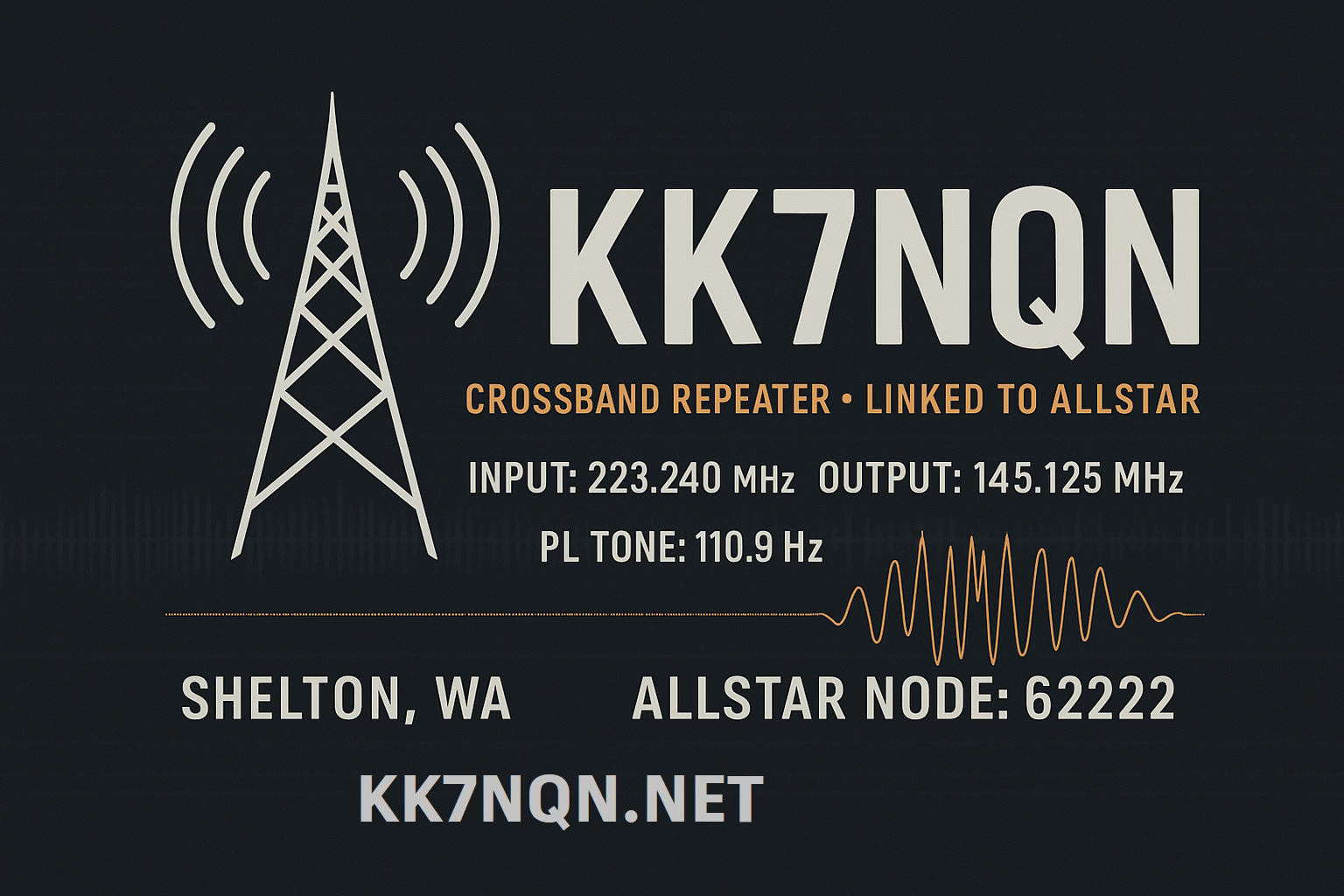
When I first emailed Steve N8GNJ about my early experiment with an AllStar-linked repeater that automatically transcribes traffic, it was running on the kk7nqn.org domain with fairly limited capability.
Since then, the project has grown into a full-stack transcription and logging system — and I’ve now added a Transcriber Service Node (TSN) that any AllStar user can link to for clean, isolated transcripts of their QSOs or nets.
Key updates since my early experiment:
- TSN open to all – Repeaters, clubs, or individual operators can connect and get only their traffic transcribed.
- No RF rebroadcast – Keeps nets private and uncluttered from busy hubs like DoDropIn.
- Instant downloadable logs – Call sign and transcript logs are available immediately after a session.
- API-ready backend – Transcript IDs ↔ call signs ↔ nets ↔ audio, all time-stamped; clubs and developers can build their own tools on top.
- Simple deployment – Runs on a Raspberry Pi with an AllStar node number; I can drop-ship a working TSN in minutes.
The original “I just need help catching call signs” idea has turned into something that’s useful for net control, accessibility, and club record keeping.
How It Started
This began when I built my own AllStar repeater and wanted to see what kind of development experiments I could do with it. One of the first big wins was adding an AI-powered speech-to-text transcription system that:
- Records every transmission
- Generates a transcript
- Tags it with timestamps and call signs
- Displays it on a live dashboard with downloadable logs
At first, it was just for me — I often have trouble catching call signs on the air, and this gave me a way to double-check without breaking the flow of a net.
Opening It Up
Once I realized how useful it was, I made the repeater’s dashboard public so others could benefit.
But because the repeater is linked to DoDropIn (and always busy), I created the Transcriber Service Node (TSN) — a separate AllStar node that anyone can link to for clean, isolated transcripts of just their own QSOs or nets.
Two Public Entry Points
- KK7NQN Repeater Dashboard – full-time DoDropIn-linked transcription @ https://kk7nqn.net
- TSN Dashboard – clean, on-demand transcripts for clubs, nets, or individuals @ https://kk7nqn.net/transcriber/
Both run on the same backend, so any data can be tied to call signs, nets, timestamps, and audio — and the public API makes it easy for others to build tools on top.
Open Source Under GNU GPLv3
From the start, I wanted this to be something any ham or club could run themselves — not just a hosted service I control. That’s why the entire project is released under GNU GPLv3 and published on GitHub.
The GitHub repository intentionally lags a couple versions behind the live system — simply because I’m iterating constantly (often multiple updates a day), and it’s not practical to push every change instantly. But the repo contains everything needed to spin up your own node, from backend to dashboards.
The Github is at https://github.com/Wintergrasped/KK7NQN-TranscriptionLogger
This lags a few versions behind. I do update it. Once the system is more stable and proven I will work on adding more Documentation and install directions (I’m only one person and I can only do so much so fast).
Stats (First 32 Days)
- 10,924 transcriptions
- 6,648 unique call signs
- 15,830 call sign sightings logged
- Database size: 21.5 MB — efficient, relational schema
- Daily updates improving transcription and call sign matching accuracy
Behind the Scenes
I’ve been building this for just over a month — doing all design, development, engineering, and testing myself. The transcriptions and call sign pulls aren’t perfect yet, but they’re improving rapidly with daily refinement.
Images
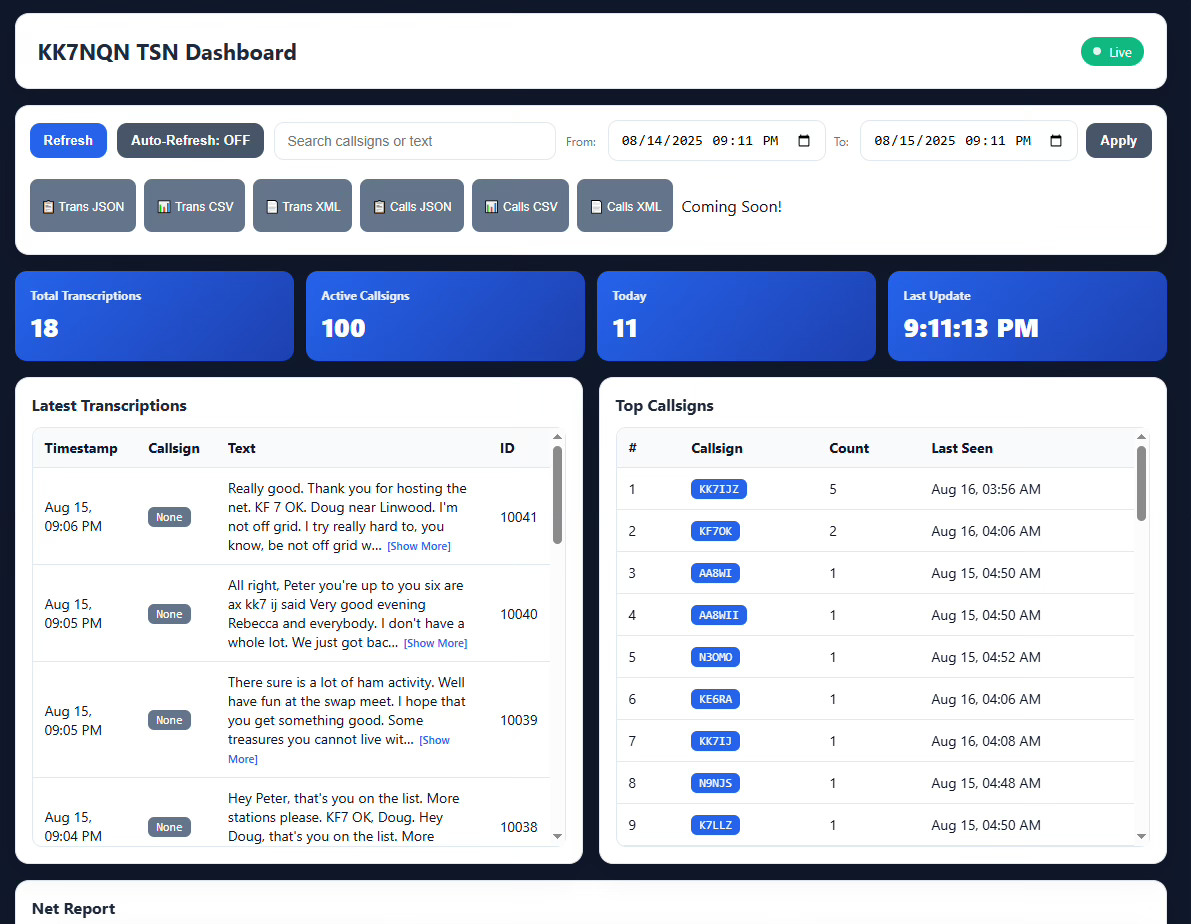
The image above is the landing page - TSN Dashboard. TSN Dashboard has the controls for the TSN where all the data from TSN lands, on a 2 minute update cycle. (This timing may change based on Server infrastructure.) This also continues down showing more in-depth stats.
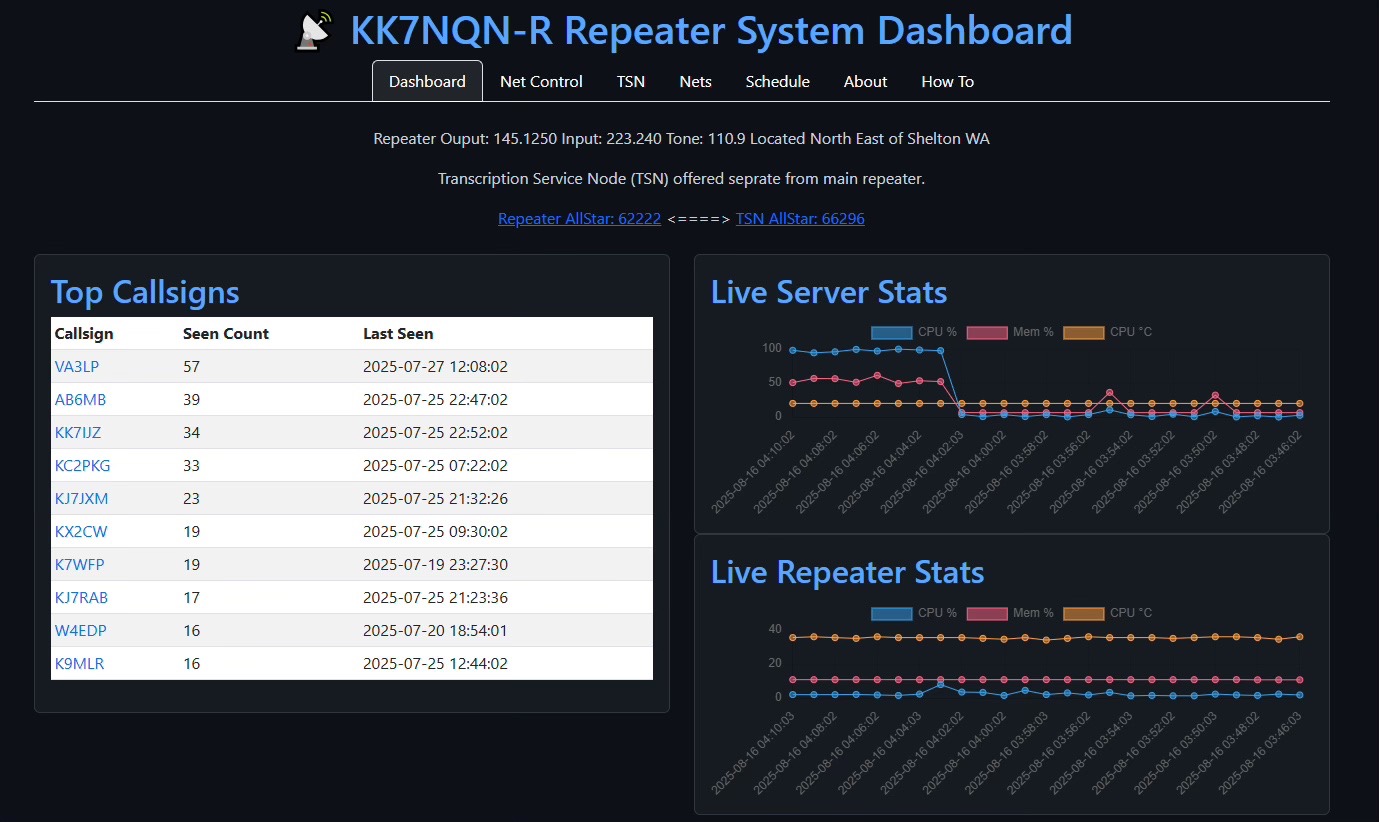
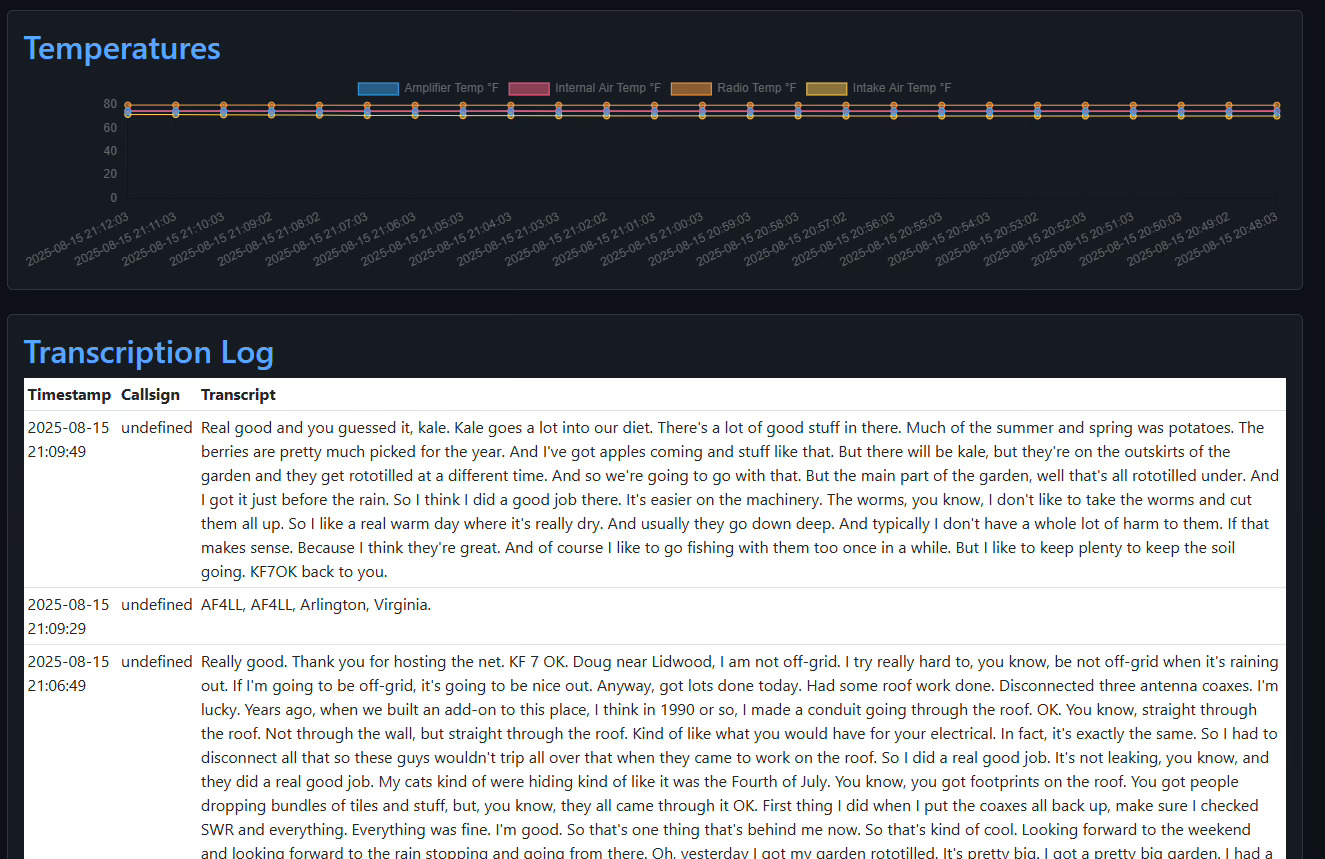
The two images above are the Main Repeater Dashboard which show system "Nerd Stats" such as temperatures and server load. It also lists the top callsigns and the last 25 transcripts. The lower portion has a search bar to search for a callsign. Clicking on any callsign on the page brings you to the Callsign profile; this also provides tabs to navigate to different pages on the website.
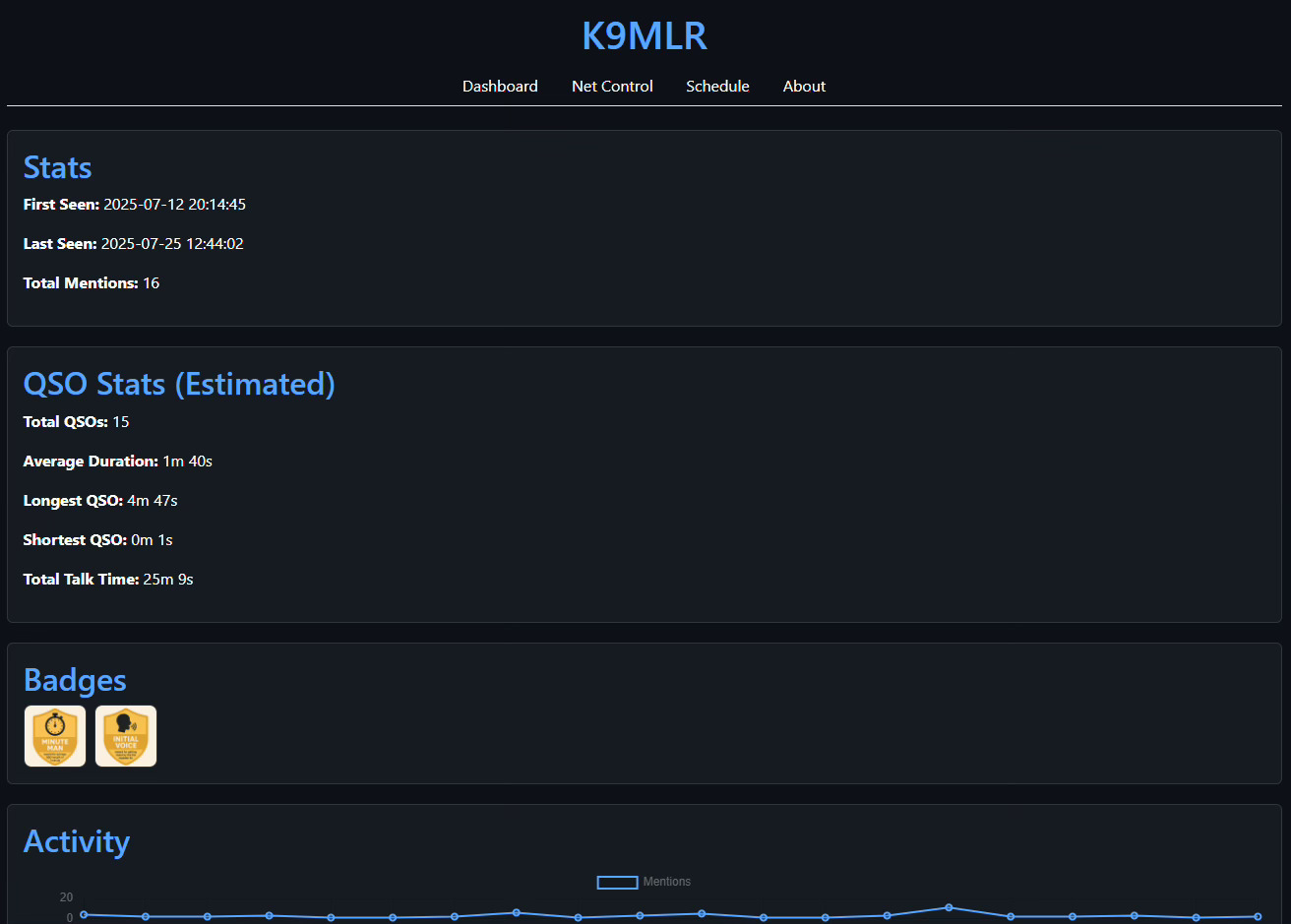
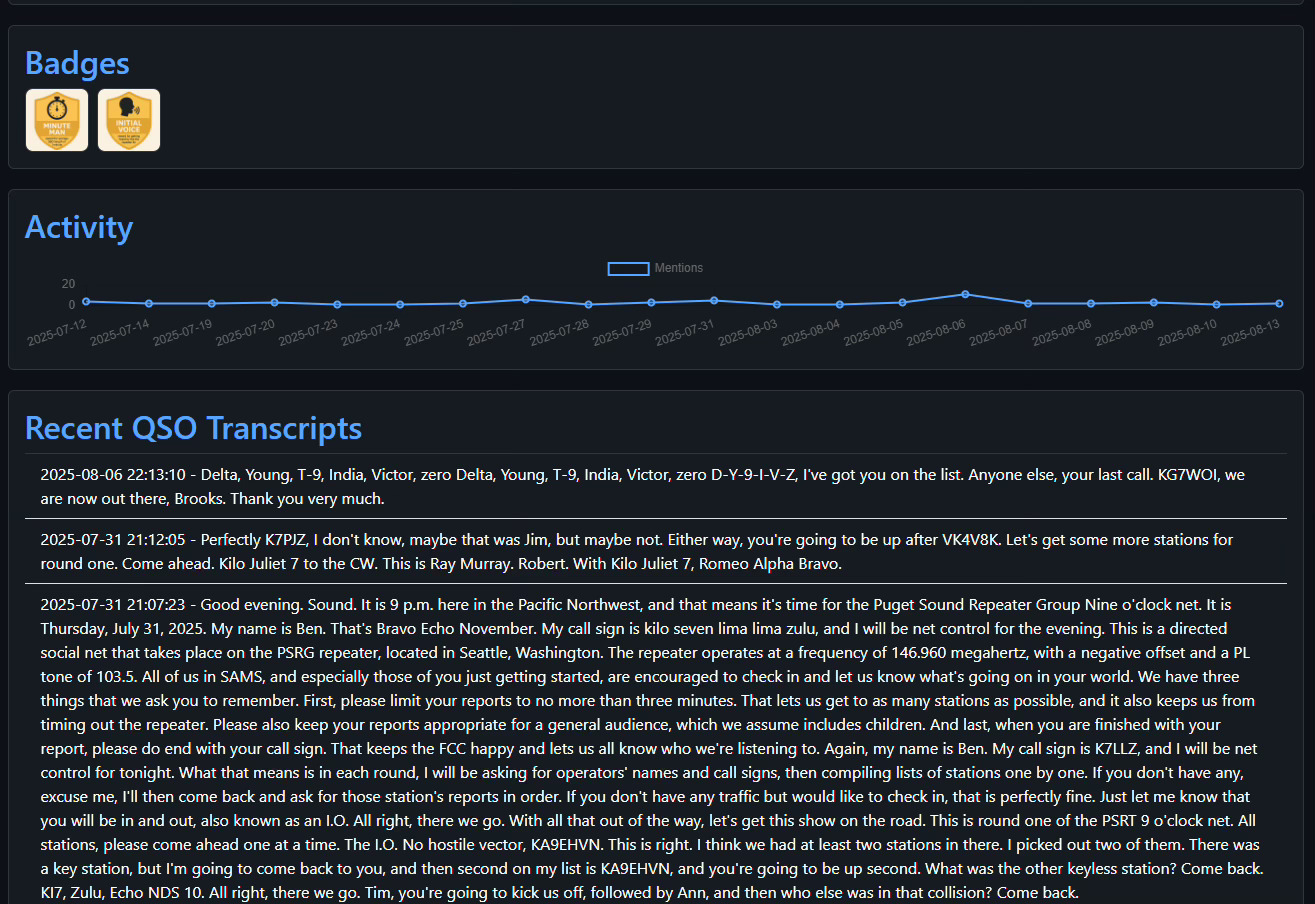
The two images above are the Callsign Profile page. This example page is displaying the activity of Megan Ralph K9MLR as an example. Callsign Profile gives stats of the callsign as its been seen by the server such as first and last seen dates, a graph of active dates, estimated QSO stats, and a list of the latest transcriptions the server has associated them with.
More Info & Connection Instructions:
Both dashboards, TSN connection info, and the GitHub repo link are on my QRZ page: https://www.qrz.com/db/KK7NQN
Browsing around pages on the website such as
https://kk7nqn.net/about.html also have details on how to use the system
The "How To" page details how to use the features of the system https://kk7nqn.net/how_to.html and has a "Quick Start" for users and Net Control Ops.
The API Documentation for Developers is located here https://kk7nqn.net/docs.html
That contains all the info needed to pull data directly from the database and use it to develop apps or webpages as I say “Someone smarter than me could do some really cool stuff with this”!
Editor’s Afterword - When KK7NQN emailed me Initially, there was “something” cool about this project that I couldn’t quite put into words. As I worked on this article, the “something” finally clicked into place in my mind - it is a missing piece in Amateur Radio.
Now, (verbal) repeater conversations are no longer transient. Now you can keep up with what’s happened on the repeater, what was said, and who said what. It’s invaluable for nets. You can read the transcripts of interesting conversations (and just skim the boring ones), follow up with the interesting conversationalists, perhaps eventually be notified when something specific is mentioned (for me, “packet radio” or “data communications”, etc.) This is kind of like watching in interesting thread on an email list.
I particularly appreciate that it’s a “value added” capability for voice repeaters that doesn’t require changes to the way a voice repeater operates. It’s additive, without being intrusive, and if (in “big one” emergencies) connectivity to Internet or the AI services used for the transcription are unavailable, the repeater works as it always has; all that’s lost is the “nice to have” service that automagically listens and transcribes for us.
I think this has the potential to fundamentally change the nature of voice repeater operations. To me, this capability makes voice repeaters a lot more interesting. This is really, really cool. Kudos to KK7NQN!
I sent this final draft to KK7NQN, who replied:
That is a great added bit and exactly the idea the system has been designed on.
Some added details:
If a repeater is running its own local copy with their repeater the system will actually still transcribe and save all the same data offline. It just won't be able to sync the local data to the web page until Internet connectivity is restored.The Whisper AI Model I use runs locally and does not need an Internet connection. The transcribe system has been designed to have each step be 100% offline and Async so it is very versatile.You could run the transcriber on something like a Raspberry Pi (with cooling) if you’re OK with a longer wait for transcripts to generate, or it can be run on a separate server with more processing power that would speed up the processing time.The Audio Capture, Transcription and Callsign Extraction are separate “Modules” that can be run on the same, or separate hardware, as long as they have a way to connect to each other.
My repeater uses a semi-separate setup with the TSN Node on a Raspberry Pi 3 that is just the audio capture that sends the audio to my server that does the transcription and callsign extraction. My server is actually a pretty efficient setup. I run the repeater on a Raspberry Pi 4 and the TSN on a Raspberry Pi 3 and those SFTP the files to a Ryzen 7 6800H “Mini-PC”. With both nodes transcribing I get about a 0.5x realtime transcribe rate so every 30seconds of audio takes about 15 seconds to transcribe (this isn’t exactly a linear scale).
Also I plan on setting up rented TSNs (eventually) and even in that setup a repeater could record a backlog of audio and send it once connection was restored.
I’m even more impressed with the system knowing now that it runs all the AI functions locally, on modest hardware! Again, Kudos to KK7NQN!
Build It And They Will Come Doesn’t Generally Work (In Amateur Radio In 2025)
By Steve Stroh N8GNJ
In my observations of Amateur Radio data communications in the 21st century, the “put up a node” or “put up a BBS” and expecting users to build their own station to connect and participate generally doesn’t work. But that certainly doesn’t mean that the situation is hopeless and new networks cannot be built. It just requires a different approach to reflect the
This article is not intended as a comprehensive treatment of this subject, but rather a “glancing blow” overview of the main point of the plaint below that “no one used my node”.
I saw another plaint on an email list (which I’m deliberately not citing) that “I put up a node, and no one connected to it, so I took it off the air”. In the 2020s, the near-universal expectation that everyone has packet capability (spare radio, TNC, dedicated antenna) isn’t realistic any more. Back then, “build it and they would come” - network node like a Net/ROM node, digipeater, or Bulletin Board System, was typical because there was a reasonable density of Packet Radio users that were curious to explore what they could do with their Packet Radio station.
Packet Radio networking went through a fallow period where many Amateur Radio Operators simply didn’t see the point of continuing to keep Packet Radio gear on the air. Thanks to YouTube, there’s been a minor resurgence of Packet Radio networking and people are curious again about Packet Radio, but often don't find much activity in their area.
What does survive in many places as “Packet Radio” networks is
- Winlink nodes (many of which are converting from 1200 bps Packet Radio to VARA FM)
- APRS Digipeaters
Neither of those are suitable “building blocks” for “bootstrapping an Amateur Radio Packet Radio network - they’re narrowly dedicated by function and technology.
In places where there is Packet Radio activity, if you’re curious about Packet Radio activity, you can “plug in” to the existing network and immediately be communicating with other Packet Radio users, and if the spirit moves you, adding additional capability to the network is welcome and quickly gets used. Just three examples off the top of my head:
- East Net Packet Radio Group (New England USA)
- TARPN Networks (various locations in USA)
- 145.050 Packet Radio Network (Northern California USA)
And of course there are other networks that aren’t Packet Radio:
- AREDN (microwave) networks (worldwide)
- Puget Sound Data Ring (HamWAN, Western Washington USA)
- HAMNET.EU (European microwave network)
- QO-100 geostationary Amateur Radio payload, which I classify as an Amateur Radio network.
But what do you do if you don’t have an existing network?
Again, “packet radio” capability in most shacks isn’t just “laying around waiting to be activated, trying to discover something new.
Repurpose an FM Repeater
One of the easiest (technical) methods to build up a local Packet Radio network is to repurpose a VHF / UHF FM repeater for use with data communications. Many FM repeaters have “gone largely quiet” and are thus available for such repurposing. It’s often not easy to convince clubs or individual repeater owners to allow data operation… but it’s hard to beat the “instant, and reliable” network aspect of using a repeater for a creating a new local data communications network.
Several lower speed (depending on the repeater, up to 4800 bps) Packet Radio systems, and VARA FM (see below) work well on almost any FM repeater.
The Technology Is A Lot Better in 2025
The good news is that it’s easier than ever to use Amateur Radio data communications - the technology in 2025 is better than it has ever been, and is rapidly getting even better. But to build a network is a bit of work, and requires different approaches than during the heyday of Packet Radio.
Here are my thoughts on how to “bootstrap” a data network, where there isn’t one, in the 2020s.
Legacy TNC2s from the Packet Radio era are mostly a dead-end. (I’ll get significant pushback on this.) From a lover of TNCs (I have a big collection), legacy TNCs are problematic to get going and use (serial ports versus USB), and (in my experience) you’ll spend more time “battling” with the arcane syntax of the command system in a legacy TNC than actually productively using them. There are exceptions, and if you like a challenge of using “vintage” systems like TNCs, then this advice doesn’t apply.
Similarly, and sadly, TNCs that are built-in to radios are generally unsuitable for Packet Radio networking. They are designed for APRS use - very short packets and thus have very small buffers for data, and thus unsuitable for the longer packets of Packet Radio networking.
Current generation TNCs such as the NinoTNC and TNC4 are much easier to use for Packet Radio. All modern TNCs are “KISS” TNCs which keep the modem (hardware and software) functionality in the TNC, but move all the networking functions into software on a host computer.
But the more state of the art approach is to use an audio interface to move the modem function (software) and the networking functions into software on a host computer. This gives the flexibility of different modems - just change the software. A few pointers for this approach:
DIRE WOLF Software TNC is the most widely used Packet Radio software for the modem. Note that DIRE WOLF has minimal network functionality (mostly APRS digipeater), but provides a KISS interface for more advanced networking and other software.
Good audio interfaces include:
Tigertronics SignaLink USB
Digirig Mobile and Digirig Lite
Masters Communications DRA series
All In One Cable (AIOC) is a great audio interface for using portable radios.
One of the easiest ways to build up a Packet Radio station is the DigiPi. Building up DigiPi stations is a great group / club project.
VARA FM isn’t Packet Radio (it’s a “clean sheet of paper” approach). It works amazingly well, providing data communications speeds of up to 25 kbps on a standard VHF / UHF FM channel when using a radio with “flat audio” interface and a high quality audio interface. VARA FM is “lightly” supported by its author but there are many good supporting documents and presentations available explaining the basics of using VARA FM.
If you’re going to use VARA FM to communicate with others and build a network, you’ll be amazed at the capabilities of VarAC, a companion app that provides many capabilities such as email, bulletins, short messaging (chatting), etc.
Bulletin Board Systems (BBS’) is experiencing a resurgence as techies experience the “retro” technology of a BBS. It’s surprisingly fun to use a BBS and exchange non-realtime messages. The best Packet Radio BBS system I’m aware of is the G8BPQ BBS package, which runs great on a Raspberry Pi. A BBS creates a “water hole” effect, a rallying point, a use case for participating in the network.
The main point of the above is to not handicap your efforts by attempting to use older, but cheap and somewhat dysfunctional (by current standards) units. Instead, use modern equipment that’s known to work well and has reasonable support available.
Evangelize The New Network
In short, any new effort like a new network will require promotion (advertising).
- Talk up the new network at club meetings.
- Do monthly support Zoom sessions to promote and support new users of the new network.
- Create a dedicated email list for the new network, such as the 145.050 Packet Radio Network folks have done. (groups.io email lists are free for up to 100 subscribers.)
- Create a dedicated web page for the new network. General advice - a dedicated website is better than a page on an existing club website, and paying a little bit for a good hosting provider (and thus avoiding spammy ads) is better overall. One cheap / easy way to get a basic website for the new network is that QRZ.com allows you to create a web page for each callsign at no cost.
Build Up Loaner Systems
In my opinion, the most critical aspect of getting a new network started is to create a small pool of loaner systems to allow those who might be interested in participating in the new network to experience it for themselves, in their home, without investing in equipment that they might end up not using if they decide they don’t like it.
The loaner systems should be, as much as possible, plug and play and impressive. The cables should be well-made and easy to figure out how to connect. The radio should be newer / shinier. The goal of a loaner system is to impress a new user so they will build their own node and join the network, and the better the loaner equipment, the easier that will be to impress the potential new user.
Building up loaner systems also allows for more effective evangelism. You can keep your network node on the air (don’t disassemble it to take it to the club meeting) and simply pick up the loaner system to take to the club meeting and actually demonstrate it live.
As part of the loaner systems, create good support documentation. Show screenshots of configuration options. More pictures, fewer words (a tendency I have to fight all the time as a “primarily text” person).
Create an easy “recipe” on how to build one’s own node, including a shopping list of all components and the most reasonable place(s) to buy the items such as radios. This is especially important if the various pieces parts are only available from not-easy-to-discover vendors such as DX Engineering, GigaParts, R&L Electronics, etc.
If possible, create an easy to get started software image. For example, if your network nodes use a Raspberry Pi, it’s relatively easy to create an image that users can “flash” onto a MicroSD card, boot up their system, change a few options such as callsign, and get running without needing to know much about Linux.
Different Audience, Including Non-Hams
One non-obvious way to grow a network is to reach out beyond “the usual crowd”. If most of the local Amateur Radio Operators just aren’t interested in joining a new network, then consider reaching beyond that crowd.
For example, do presentations at high schools (STEM instructors love such external material), technical colleges, and local college Engineering programs. In the presentation, focus on the fun aspects of the new network and that it’s entirely independent of the Internet, mobile networks, satellite, etc.
Emphasize that the new network is local networking via radio. Then explain that while you do have to have an Amateur Radio license, that’s mostly a formality and that the Technician license is easy to study for and pass. Don’t fall into the trap of trying to explain the wide world of Amateur Radio activities (they’ll discover all of that for themselves soon enough). Your goal in this evangelism is to grow the new network.
For example, if you’re pitching the new network to a younger, techie audience, they’ll probably be more receptive to (fast, TCP/IP capable) AREDN technology rather than (slow, unique AX.25) Packet Radio technology.
Building New Amateur Radio Networks Is Possible
In conclusion, it is possible to grow new Amateur Radio networks from scratch, despite discouraging past experiences. What’s required is a reasonable assessment of a local use case (a network system that works in your area), some planning up front (website, email lists, etc.), a modest budget to create loaner equipment, patience, and willingness to try new approaches like pitching the new network to non-Hams, that can quickly become new Hams.
ZR > BEACON
By Steve Stroh N8GNJ
Short mentions of Zero Retries Interesting items.
Maty Weinberg KB1EIB is Retiring From ARRL
This is a real changing of the guard. I’ve interacted with KB1EIB many times when I was involved in TAPR with the many Digital Communications Conference (DCC) Proceedings that Maty was in charge of assembling and arranging for shipment (back when paper was a thing) to the DCCs.
KB1EIB is the consummate professional. She was unfailingly polite and helpful and efficient. No balls ever got dropped in my dealings with her. She will be sorely missed at ARRL Headquarters.
Trials and Errors #64 (8/24/25): Tech-Focused Hams -- A Shot Across the Bow to ICOM, Yaesu and More
Dave Jensen W7DGJ in his Trials and Errors column on QRZ.com:
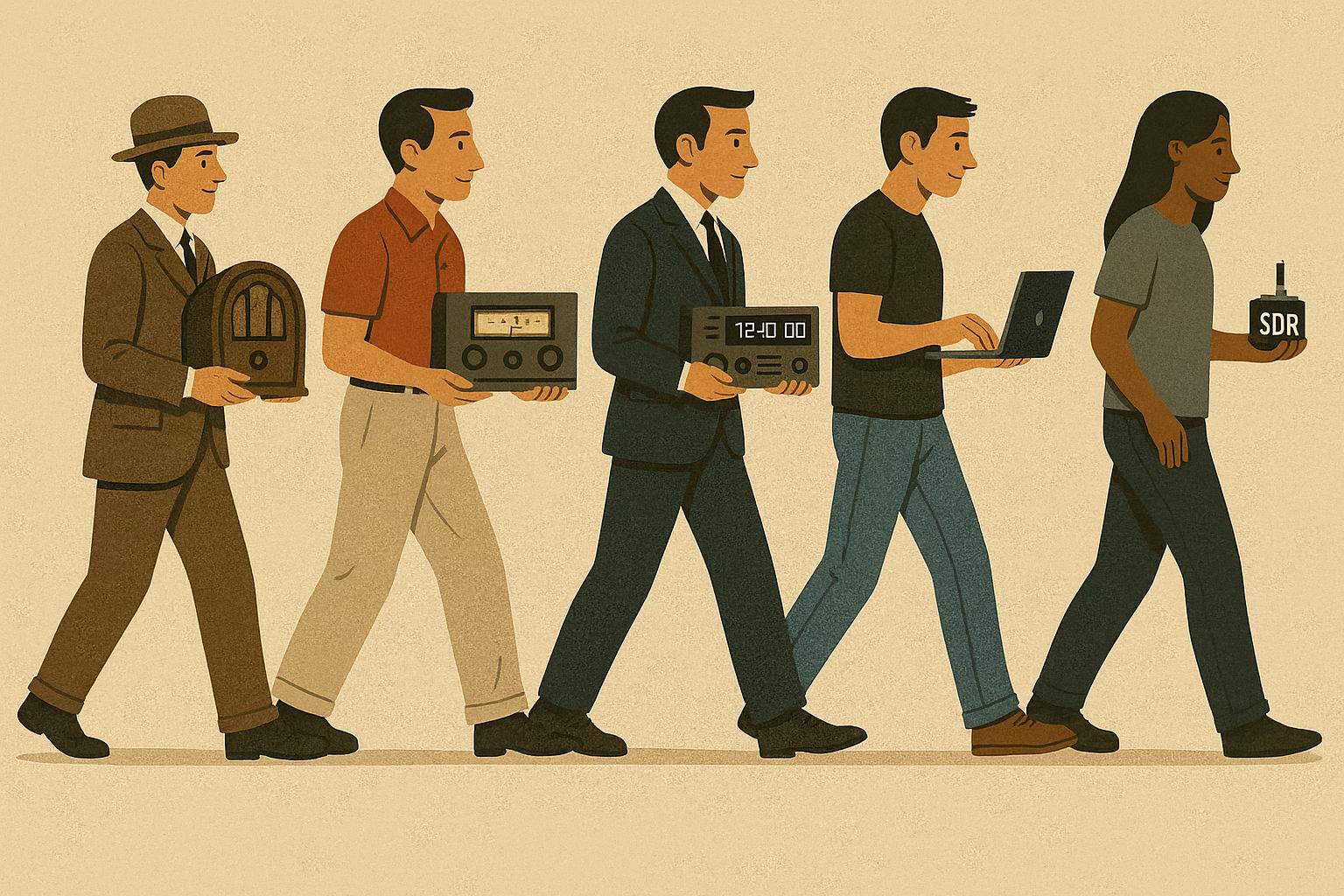
And while I was writing that, I discovered that the young people I was speaking to were engaged in ham radio through a different interest mechanism than me. At local events, I would talk up my latest DX conquest on HF but these folks were talking about modes like VARA or M17, discussing something they'd seen being developed in the open source world. I couldn't even participate in those conversations, but I noticed how passionate they were about what they were doing. Just like I was as a young guy building a Heathkit and getting on 40 meters.
Recently in an email exchange I had with Steve Stroh (N8GNJ -- author of the Zero Retries newsletter) we discussed this new group of hams.
"I think those digital/data modes are “skating where the puck is going to be” for the current generation of new hams that is quietly -- even stealthily -- coming into Amateur Radio," Steve told me. "Those 'NewTechHams' that I’ve been taking note of in Zero Retries are coming from software development, makers, engineering students, IT professionals, and so on, and they have a very different agenda within Amateur Radio than our generation. They think, "I need a new radio, so I’ll sit down and write one . . . an SDR."
Steve and I agree on the fact that these new hams are nearly invisible to many elements of the hobby.
"Yes, invisible! Especially to the ARRL and conventional Amateur Radio activities because they want to explore 'the geeky side of digital radio' and thus learn, hands-on, about radio technology. They’re not joiners of organizations like the ARRL, and they aren’t subscribers of magazines. In fact, they aren’t contesters, or DXers, or… much of anything conventional. If Amateur Radio is to have a future, it will be because this generation of techies can be convinced to join and support and expand Amateur Radio," Steve concluded.
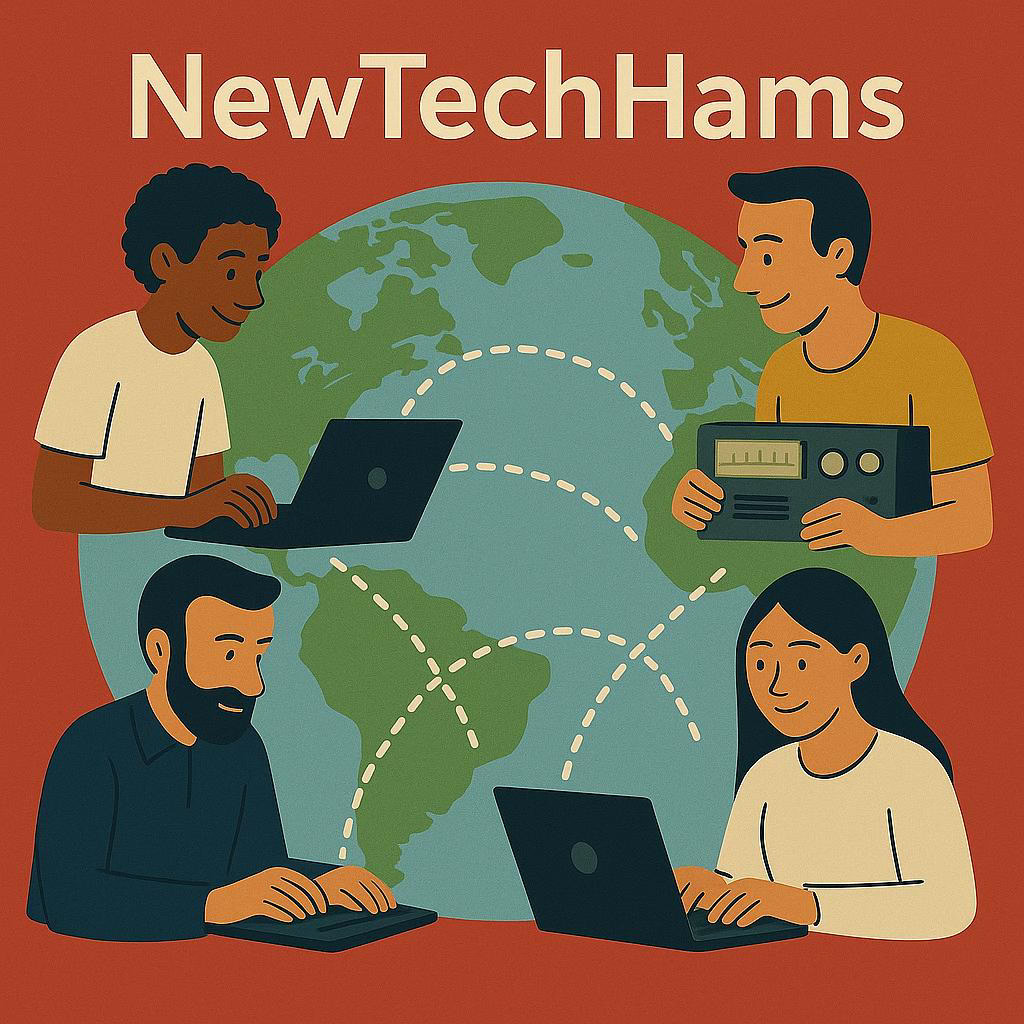
In this column, Dave Jensen W7DGJ really embraced, and amplified from his personal experience, the emergence of NewTechHams (and used that phrase that I invented in Zero Retries; it’s cool to see that verbiage expanding into other Amateur Radio media). Kudos to W7DGJ for the two informative graphics that he included with his column (shown above) - those do a good job in a glance at explaining NewTechHams.
My thanks to W7DGJ for the conversation and recognition that the NewTechHams not just are coming in, but they’re here and they’re making their own unique impact in shaping Amateur Radio now and into the future.
I’m also interested in W7DGJ’s mention of the upcoming TX-1000 transceiver by Lab599, designed by Dmitry Panin UA3REO from his earlier work on “WOLF RADIO” which is described as:
UHF/VHF/HF SDR transceiver with a host of features that come from the core of those NewTechHams that Dmitry worked with in the open source environment.
Meshcore Repeater Deployed In Surrey, British Columbia, Canada
I saw a brief mention of this on Facebook, and Reg Natarajan VA7ZEB followed up via email with a bit more detail:
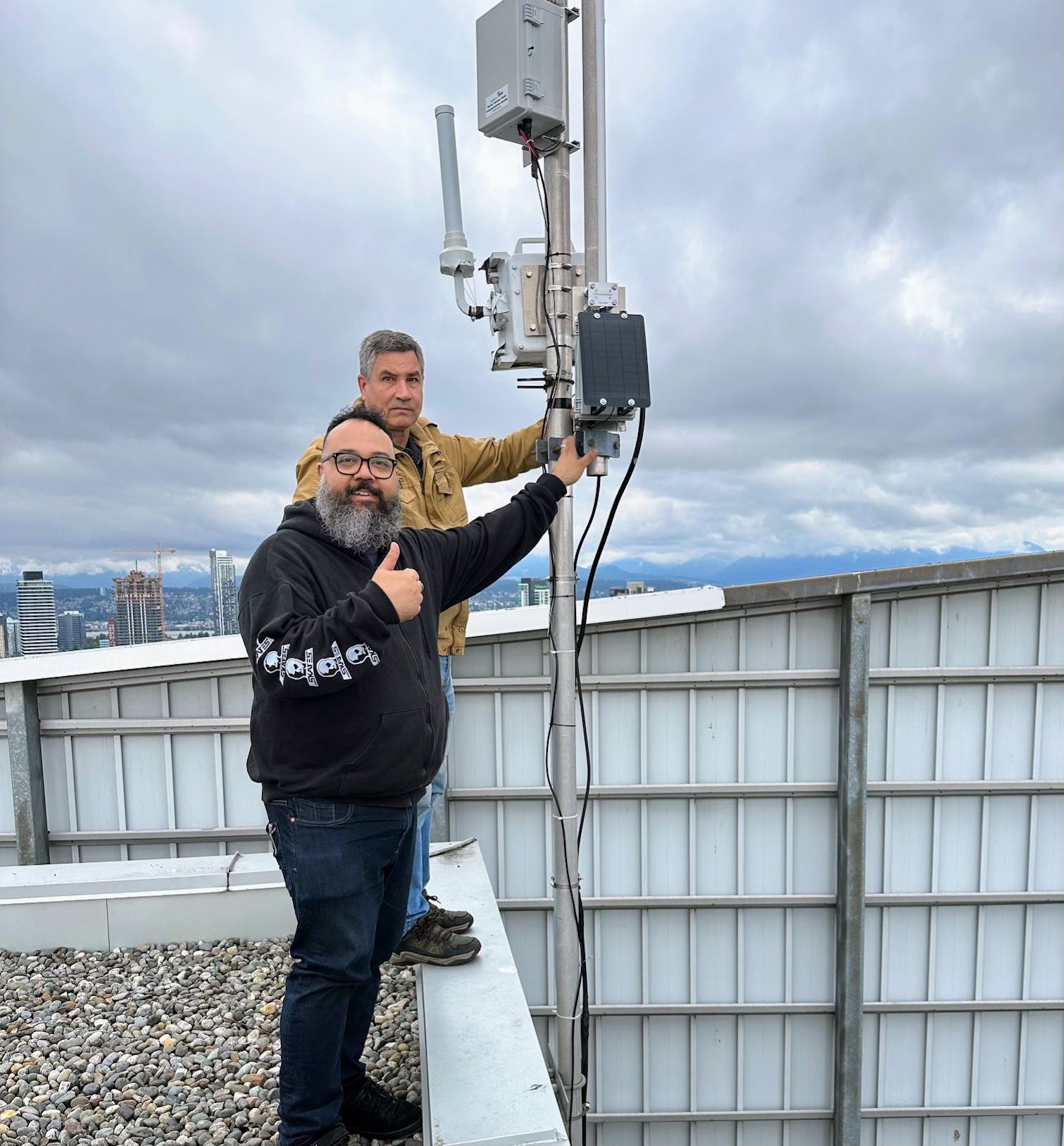
The Surrey Amateur Radio Communications group has installed a solar powered Meshcore repeater at its north repeater site on Concord Tower. This project, led by SARC member Merlin Boissonneault (in black), is an effort to make Meshcore a truly useful emergency messaging platform. Meshcore is an evolution of Meshtastic, which didn't work for us at all. As Merlin puts it, “It’s Meshtastic, except it works.” Initial results are very promising, with many of us messaging successfully last night. Most Meshtastic devices can be flashed with Meshcore. If you have line of sight (or proximity) to the Surrey Repeater at King George & 100 Ave, join us on 910.525 MHz.
It’s great to have these “reports from them that’s doin” in real world deployments.
Meshcore is an alternative to Meshtastic that runs on some LoRa devices. One key difference is that some Meshcore features are proprietary (require a license fee to use) and Meshtastic is entirely open source. This article seems to be a reasonable treatment, from a reliable source, of the technical differences between Meshtastic and Meshcore:
MeshCore is a lightweight alternative to Meshtastic LoRa-based off-grid messaging
My thanks to Reg Natarajan VA7ZEB for this item.
Low Drive Level 420-450 MHz and 220-225 MHz Power Amplifiers Available From KH6HTV
I’ve written previously about Jim Andrews KH6HTV series of power amplifiers, originally designed for the very low power drive levels from digital television equipment. KH6HTV’s power amplifiers are unique because they can be driven to full power by the very low power output of a typical Software Defined Transceiver (SDT). Thus KH6HTV’s amplifiers make it practical to use SDTs for actual (rather than very low power / across the bench) communications in Amateur Radio operations. I had previously queried KH6HTV about the potential to build a 220-225 MHz version of his amplifiers, and he had previously done the research work to confirm that such a unit is possible to build.
I had a recent email conversation with a Zero Retries reader bemoaning the lack of amplifier options for Software Defined Transceivers and other low power innovative radio systems such as IP400.
I wasn’t sure about the current availability of KH6HTV units, so I emailed KH6HTV and he replied:
Yes, I am able to build stuff again for hams and will accept orders.
Reference the model 70-9B. I have one in stock for immediate shipment. To build more it would typically take me about 3 weeks after receipt of order. I don't normally keep any of my products in stock.
I am able to build a version of my amplifiers for 220 MHz. I would build it the same as the model 70-9B, except I would use a different semiconductor module optimized for 220 rather than 430 MHz. What I use at 430 MHz (70cm band) is a module which puts out 60 to 75 Watts max CW. For 220 I can't get a module which does that much power. What is available is one doing 30-35 Watts max CW. I have never tested it, only looking at its spec. sheet. But I expect it would behave very similar to the 70-9B spec. except with 1/2 the max. RF output power.
I would need to charge the same for either the 220 or 430 version, i.e. $450 ea. + shipping.
Let me know exactly what you want and I can the furnish you with a formal quotation.
From the KH6HTV Product Page:
70cm & 23cm RF LINEAR POWER AMPLIFIERS
Note: power ratings are: P(saturated) for CW & FM / P(pep) for VUSB-TV & SSB / P(average) for DTV
70cm Amplifier, 70W/25W/10W, 53 dB — Model 70-9B Specs 11-23
70cm Amplifier, 20/10/3 Watt, 53 dB — Model 70-7B specs rev 5-21
23cm Amplifier, 30/15/4.5 Watt, 49 dB — Model 23-11A Specs 2-24
NEW ! – 23cm Amplifier, 15/10/2 Watt, 50 dB — Model 23-12B Specs_revFeb2025
Price List (23Aug25) (PDF)
Note that KH6HTV’s amplifiers are unidirectional - low power TX in, high power TX out. They are not bidirectional amplifiers suitable for use with a transceiver - receive signals will not be passed through the amplifier when not transmitting. Thus to use a KH6HTV amplifier you would have to use a SDT that has separate Receive and Transmit connectors, or use a separate Software Defined Receiver (SDRx).
My thanks to KH6HTV for making these uniquely capable amplifiers available.
Future Icom ID-5200 Shown at Ham Fair 2025
Icom UK:
ICOM Announces New ID-5200 & AH-6 Concept Models at Tokyo Ham Fair 2025
Icom have used the Tokyo Ham Fair to showcase a preliminary look at two new concept models: the ID-5200 144/430 MHz Dual-Band Transceiver and the AH-6 Automatic Antenna Tuner. Please note that specifications may be subject to change in the future.
ID-5200 144/430 MHz Dual-Band Transceiver
The ID-5200 (shown above) is a versatile 144/430 MHz dual-band transceiver which will support both FM and DV (Digital Voice) modes. A key feature is its ability to perform simultaneous dual reception of FM-FM, FM-DV and DV-DV signals.Touchscreen Operation - The unit will feature a touchscreen for intuitive operation and easy access to various settings and functions.Broad Reception Capabilities - It will receive VHF, UHF and Airband signals expanding your listening options.Wi-Fi and Bluetooth Connectivity - The ID-5200 will be Wi-Fi enabled and includes Bluetooth connectivity allowing for seamless integration with other devices.Internal Gateway Function - An internal gateway function will allow you to connect to Wi-Fi and operate in terminal mode or access point mode offering flexible networking options.DV Repeater Monitoring - It will support a dedicated DV repeater monitor function to help you stay connected.
This was the only mention I could find online (in text - there were ample YouTube “followers on” mentions). I saw this mention originally on Ham Radio Crash Course by Josh Nass KI6NAZ - ANNOUNCED! ICOM IC-7300MK2, ID-5200, & More at Tokyo Ham Fair!