Zero Retries 0133
2024-01-05 — What’s New at Digital Library of Amateur Radio & Communications - January 2024, Connect Systems CS800D PLUS - Next Generation
Zero Retries is an independent newsletter promoting technological innovation that is occurring in Amateur Radio, and Amateur Radio as (literally) a license to experiment with and learn about radio technology. Now in its third year of publication, with 1200+ subscribers.
About Zero Retries
Steve Stroh N8GNJ, Editor
Jack Stroh, Late Night Assistant Editor Emeritus
In this issue:
Web version of this issue - https://www.zeroretries.org/p/zero-retries-0133
Request To Send
Commentary by Editor Steve Stroh N8GNJ
Paid Subscribers Update
My thanks to Prefers to Remain Anonymous 19 for becoming a Founding Member of Zero Retries!
Financial support is a real vote of confidence for continuing to publish Zero Retries.
Radios are Computers - with an Antenna
I coined this phrase in the comments I submitted to the FCC yesterday (see item below) and I rather like it and will begin using it regularly. I think this phrase captures perfectly that radio technology is now firmly in the computing / software realm. (Actually, that’s been true for some time.) Yes, there will always be “simple hardware radios” and of course conventional components like filters and power amplifiers. But, especially when using digital / data modes, the hardware of the radio will largely be in service to the integral computer and thus, software. It is now a new world of radio technology, and this phrase captures that perfectly.
Update on my Comments to the FCC on Docket 16-239 NPRM
My comments are now officially on record at the FCC.
In addition to early commenters Jeremy Taylor and Ron Economos, Josh Shupack, Tom Azlin (1) (2), Willis Keith Stroud, and Steve Lampereur have joined me in commenting on the NPRM. Kudos, folks!
No comments (on the NPRM) to date from: ARDC, AMSAT, ARRL, HamOpen, ORI, TAPR, etc. - organizations which could reasonably be expected to favor maximizing experimentation in the US Amateur Radio Service. I hope that lack of comment to date is “late as possible gamesmanship” rather than apathy.
Ten Most Zero Retries Interesting Items of 2023 (Perhaps Next Issue)
Last week I imagined that I would use this issue for highlighting the Ten Most Zero Retries Interesting Items mentioned in Zero Retries in 2023. But the pressure to get my comments into the FCC on Docket 16-239 NPRM resulted in a time crunch from prioritizing that. Thankfully three great Zero Retries Interesting “articles” from other authors “showed up”, so I’ll try to get “Interesting Items” article completed for the next issue of Zero Retries.
Hamvention 2024, Ho!
Hamvention 2024 in Xenia, Ohio, USA countdown - 19 weeks!
In close consultation with the Zero Retries staff (my wife Tina KD7WSF), we will likely be attending Hamvention 2024 on May 17-19, 2024. We will be attempting to secure a table in one of the buildings (in progress). Now that the decision is made, I’ll post regular updates.
Nice Mention(s) of Zero Retries in Special Edition of Hot Iron Newsletter #123
Frank Barnes W4NPN:
Hot Iron is normally a quarterly publication and the next issue is due out at the end of February. But we thought we would celebrate the arrival of 2024 by publishing a special New Year’s edition.
It contains a variety of topics and we solicit any ideas you have to make Hot Iron better!
It is attached to this email and will shortly be posted to the website and we hope you enjoy it!
…
Zero Retries newsletter #0131 has a lot of information you won’t find elsewhere, including a Raspberry Pi link.
The Zero Retries newsletter always contains articles of interest. Click the link!
My thanks to W4NPN and Technical Editor Peter Thornton G6NGR for these nice mentions of Zero Retries! As this issue of Zero Retries publishes, this issue of Hot Iron is not yet posted on the Hot Iron Newsletter’s website. Again, Hot Iron is a delightful, informal, informative newsletter and I enjoy receiving it and reading it. Recommended!
The Substack Problem
There is a significant problem with Substack, the platform I currently use to publish Zero Retries. I’ve only recently become aware of “the issue”. I’d prefer not to say “the word” here in Zero Retries and end up insta-auto-banned by many systems, especially for international readers, for uttering “the word” in what’s supposed to be a mostly politics-free technically focused newsletter.
Fortunately, Ty Burr, who publishes Ty Burr’s Watch List on Substack (and braver than I am about “the word”), offered what I consider a good, balanced take on the Substack Problem in Whither the Watch List in 2024? Burr’s concerns, and tentative conclusions mirror mine. My assessment of the Substack Problem is that the “tech bros” management of Substack isn’t going to change their stance absent some very large Substack newsletters such as Sinocism or Letters from an American “voting with their readership” by moving their large readerships to other platforms. That may happen, or may not.
Moving Zero Retries off Substack is an option, but it wouldn’t be a “simple” operation, despite what other platforms claim. Fortunately Substack (to date) allows porting out all current email subscribers, and I control the zeroretries.org domain, so there’s that. But unless another platform does an extraordinary job of porting in Zero Retries in toto (I’m skeptical), all previous links in past issues of Zero Retries where I reference previous stories in Zero Retries will be broken (they’re specific to Zero Retries issues on Substack), etc.
One potential solution is to do a cutover as of a specific date for Zero Retries issues on Substack, and the last post I make on Substack directs readers to the new platform and “New Zero Retries”. But if I redirect zeroretries.org to a different platform, surely that will impact the existing Zero Retries issues on Substack. Again, changing platforms isn’t a simple issue for an existing newsletter with an established readership like Zero Retries.
In mentioning this now, I wanted to acknowledge that the issue is real, and I’m thoughtfully considering the future of Zero Retries on Substack. I’m mad that Substack’s management isn’t (seemingly) taking “the issue” seriously and that they’re seemingly caving to these nitwits causing the problem. I’m irritated that dealing with a move off Substack will impact my writing time for the Zero Retries Guide to Amateur Radio in the 21st Century book that I’m writing, ramping up to do video (which now I may not invest in Substack’s video system, despite how nice that would be instead of YouTube), and other Zero Retries projects.
It’s only fair to mention that starting Zero Retries wouldn’t have been possible without a platform such as Substack, which was the most mature email newsletter subscription platform (that I was aware of from my research) when I started Zero Retries in July 2021. For Zero Retries to work, I require a platform that allows me to “just write” and the platform manages almost everything else such as email, payments, etc. (Thus, a DIY-with-much-fussing platform like WordPress just wouldn’t work for me.) Substack does those support functions pretty well. But in 2024, there are now some other capable email newsletter subscription platforms including Beehiiv, Ghost, and Buttondown worth serious consideration.
And… almost on cue to demonstrate the complexity of “whither Substack”, as I was putting the last bits of gloss onto this issue of Zero Retries, this article showed up in my reading queue:
Irrational Optimism and the Rebuilding of Local Journalism
The rational arguments for starting The Mill were obvious to me and I think they still stand today: that local journalism is a crucial facet of society that connects us to the places we live and the people who live around us and gives us a sorely needed sense of shared reality in an atomised age; that this kind of journalism has been decimated in Greater Manchester and pretty much every other community in [the UK] because its old business models have collapsed; that people will be willing to pay for great local journalism again if inspires them and thrills them, as well as imparting useful information.
Thanks for your understanding on patience on “this issue”. I’ll keep you posted.
73,
Steve N8GNJ
What’s New at Digital Library of Amateur Radio & Communications - January 2024
By Kay Savetz K6KJN, Internet Archive's Program Manager, Special Collections
There are two things I love about New Year’s Day: the Hoppin’ John dinner that my wife makes, and Public Domain Day. Hoppin’ John is a traditional peas and rice meal; Public Domain Day is the day when material copyrighted years ago enters the public domain.
On January 1, 2024, content published in 1928 in the United States entered the public domain. There was much talk about how the 1928 Disney movie Steamboat Willie, and therefore the first iteration of Mickey Mouse, entered the public domain. And also thousands of books (such as D.H Lawrence’s Lady Chatterley's Lover) and lots of music, including Cole Porter’s “Let’s Do It (Let’s Fall In Love)”. (Here’s a nice rundown.) That’s all well and good, but what about the amateur radio content?
I found well over 100 items already in DLARC that were published in 1928, including the books Radio — A Study of First Principles by Elmer E. Burns, The Radio Manual by George E. Sterling, Radio Engineering Principals by Lauer and Brown, and Radio Receivers and Servicing by K. M. Macilvain.
The real fun, in my opinion, comes with radio magazines, which add art, advertisements, and really show the fun of the radio hobby in 1928. Start with the November 1928 edition of Science and Invention (with an article about how an airplane transmitted a photograph via radio, and a bargain at just 25 cents cover price!) Then enjoy the November 1928 edition of Radio Listeners' Guide and Callbook (the ads are amazing.) You can read a whole year of Radio magazine, and The General Radio Experimenter, and Radio News, and QST.
Every word, every picture in those public domain radio books and magazines are yours to do anything you want with. Use the art in your newsletter. Re-release the best stuff as a blog or ebook. They belong to everyone.
My Hoppin’ John-fueled public domain excitement abated, I’m ready to change topics. Here’s a great little story about cause and effect.
I met with this publication’s esteemed editor, Steve Stroh, at a coffee shop where he handed me a grocery bag filled with ham radio related floppy disks and CD-ROMs. I’ve barely began processing all of that media, but certain discs caught my eye: TAPR Software Library CD-ROMs for 1996, 1997, and 1998. Though I’ve got a lot more digging to do on them, I know already that these discs are absolute gold: in the RAUDIO directory I found 50 episodes of Amateur Radio Newsline in RealAudio format. Those episodes span January 21 1996 through December 27 1996 — one of the lost years of Newsline, now completely recovered! Since I doubt any of us has working RealAudio software in 2024, I converted the episodes to MP3 format, and like magic, here is all of Newsline for 1996. (And they are all transcribed. Click the Subrip link in any Download Options pane to read an episode instead of listening.) There’s so much good stuff here — perhaps start with the on-the-spot reporting from the 1996 Dayton Hamvention.
I crossed the 1996 Newslines off the DLARC Wantlist, but there are still more than 1,700 episodes waiting, somewhere, to be re-discovered.
Here’s another effect from those same TAPR CD-ROMs in Steve’s grocery bag: I learned about Ham Radio & More, which was a radio show about amateur radio hosted by Len Winkler KH7LW. It aired from 1991 to 1997, and was the first radio show devoted to ham radio on the commercial radio band. It started on a Phoenix, Arizona AM station, then became nationally syndicated. Len talked about the issues of the day (so much No Code discussion) and interviewed important people in the ham world. Notable guests included Wayne Green, Bob Heil, Sheriff Joe Arpaio, Princess Elettra Marconi, and Senator Barry Goldwater.
Len himself digitized 149 episodes of the show (including the episodes with the people mentioned above) and made them available at his Ham Radio & More web site. He has graciously allowed me to make them available in DLARC (where they’ve already been transcribed.) Even better news — there are another 169 or so episodes that Len never got around to digitizing. Those tapes are on their way to DLARC World Headquarters (AKA my office), where I will digitize them and make them available online for the first time. I’ll let you know when they start to roll in.
Those are only the first two things to come out of the first discs from Steve’s big bag of media. You don’t need to wait for me to find the next gem! Feel free to explore them yourself. Here are the TAPR Software Library discs for 1996, 1997, and 1998. (And, if you have ANY other TAPR CD-ROMs, please let me know.)
Meanwhile, at Massachusetts Institute of Technology, the librarian decided that it was time to cull the stacks of old books about radio, which they sent to DLARC. MIT sent five boxes of books: we’ve started digitizing them but still have a few boxes to go. As I write this, 39 books are available in the Radio Books from MIT Libraries collection, including early radio texts in English, French, and German. These include Die Elektrische "Wellentelegraphie" und ihre Anwendung (Electrical “Wave Telegraphy” and its Application), published 1898; and Sams’ 1962 “Single-Sideband Communications Handbook.” More books will trickle into this collection as the scanners do their work.
Let’s talk about magazines and newsletters. First, a big one: 370 issues of the W5YI Report! The W5YI Report was published by Fred Maia, W5YI, from 1978 until 2003. It was known as "America's Oldest Ham Radio Newsletter." Maia died in 2012. The issues uploaded so far are provided courtesy of W5YI Licensing Services. It’s not a complete set, but 370 issues is nothing to sneeze at. Allan Batteiger, president of W5YI, told me — I love this part so much — that the reports were scanned by his 13-year-old granddaughter. Nice work, kid!
In an incredible bit of serendipity, the manager of the estate of Fred Laun (K3ZO) sent several boxes of W5YI reports to the DLARC scanning center. It’s likely that that collection will fill in some of the gaps. We’ll know more soon.
Also: the complete 100-issue collection of CQ-DATV is now available. This free amateur television magazine was published from 2013 through 2022, in PDF but also in EPUB and other formats for reading on your ebook reader. For articles with source code or other data, the files are downloadable from the relevant issues. If you want it all, download the 3,600-page monolith of every issue.
Newsletters, meeting minutes, and other documents from the KARO-ECHO Ham Radio Association, based in central California, are now in DLARC. We’ve added all 15 issues of Hambrew magazine, "for amateur radio designers and builders," which was published by George DeGrazio WF0K (SK) 1993 through 1997. And, a complete archive of Amateur Radio Weekly, Cale Mooth K4HCK’s wonderful email newsletter that highlights exceptional ham radio content on the web.
A tangent: DLARC (and Internet Archive in general) can easily ingest and display PDFs (and audio files and video files and images and emulated software and…) but cannot easily deal with pure HTML due to technical and security reasons. (Here I’m talking about the “main” Internet Archive site, not the Wayback Machine.) That’s why a resource like Amateur Radio Weekly, an HTML/email newsletter, is converted to PDF for easy viewing in a collection within DLARC. When it comes to Zero Retries, this publication’s esteemed editor Steve Stroh didn’t care for the way his newsletter looks using various automated PDF conversion methods, so he’s creating bespoke PDF archives of ZR by hand. End of tangent.
So far, the ham radio software collections at DLARC were for Apple II computers, Atari computers, and DOS machines. I just added two more: for Commodore computers (which, with only three items so far, is admittedly a placeholder. Commodore 64 friends, point me to your radio software!) and for CP/M computers. It might not look like much, but these 10 items of CP/M ham radio software were transferred from 8-inch floppy disks. That was the result of months of work and patient waiting, the coordination of a team of experts, and several pieces of specialized software and hardware. If you need digipeater software for your CP/M box or want to pore over the source code to the VADCG terminal node communications program, there goes your weekend.
Digital Library of Amateur Radio & Communications is funded by a grant from Amateur Radio Digital Communications (ARDC) to create a free digital library for the radio community, researchers, educators, and students. If have questions about the project or material to contribute, contact me at kay@archive.org.
DLARC want list: https://archive.org/details/dlarc-wantlist
Editor’s Note - K6KJN’s experience with the TAPR Software Library CD-ROMs I donated is a perfect example of the expedience (in my opinion) of handing over material to DLARC (and IA in general) versus doing it yourself. IA and K6KJN has the expertise to deal with tricky issues of digitizing and conversion. In my case, I tried to view some of those TAPR CD-ROMs and could not do so on my Mac laptop - they just errored out for some reason. Not to mention that my previous experience years ago of trying to convert some Real Audio files resulted in total frustration. And of course that all audio files on IA and DLARC are automatically transcribed (if not exactly in a reader-friendly format). Thus I’m happy to have the more experienced IA folks like K6KJN, and the wonderful, hardworking folks at IA’s (paper) scanning centers do the hard work of getting our old, beloved Amateur Radio material into good form for public access.
Personal Note - I am very happy that copies of the W5YI Report have surfaced and are now available in DLARC. When you read some of those issues, you realize how immense the loss of Fred Maia W5YI and his impartial overview of the movers and shakers and trends of US Amateur Radio that he reported out during the life of the W5YI Report. We could really use a perspective like that in this tumultuous era of Amateur Radio’s halting evolution into the era of “radios are computers - with an antenna”.
Connect Systems CS800D PLUS - Next Generation
By Jerry Wanger KK6LFS
Editor’s Note - The origin of this article was an email by KK6LFS to subscribers of the Connect Systems, Inc. email list, which I receive. (To sign up for the email list, there’s no link on the web page, but every so many visits to the web page, a popup will appear for signing up. I can attest that Connect Systems does not spam you.)
KK6LFS’s insights were refreshingly direct about the state of dealing with Chinese (and Japanese) manufacturers that I thought would benefit from exposure to the Zero Retries readership. KK6LFS graciously agreed to this “reprint” in Zero Retries. I first discussed the CS800D PLUS in Zero Retries 0055 - CS800D PLUS Dual Band DMR and Analog Mobile Radio.
Connect Systems is busy working on the next generation of the CS800D PLUS. This is a revolutionary radio that will have features that we hope all HAMS will be interested in. We have been talking about this for a long time and many of you probably think this is just more vaporware.
Something happened late this year that is going to allow us to finish the project in the near future. To understand what happened you need to understand how foreign companies work.
If you deal with an existing Japanese radio company and tell them you would like them to do a new project and you tell them what you would like, you will get a polite thank you but they would not commit to doing it. They have a not invented here attitude.
The Chinese on the other hand, are more open to do something new. While they would gladly steal something that is already done, they will also seriously consider something completely new. The only issue is money and time. Sometimes you have to pay them to do it or commit to a large order in advance. When we sold the CS108G a few years back, we had to pay Xiegu $10,000 to implement a spectrum analyzer and have that feature exclusive to us. That later became a standard in their other radios.
We have been working with our vendor (CoValue) now for about 10 years and we have a good track record of buying quite a few products and promptly paying them what we owe them.
CoValue does not release their source code for other people to work on it because they are afraid of you going to another vendor and competing with them as is the custom in China. If you did that in the United States, you would be sued for copyright infringement.
However, if the price is right, they will release their source code. For the simple Analog Radio, they want about $20,000 and for their DMR radios they want about $300,000.
The CS800D is an example of a product they custom developed for us. We paid a nominal amount for the development cost and had to pay their cost to get the radio certified under FCC Part 90.
The CS-BFD is an example of a joint development. We paid CoValue their out of pocket cost to develop the hardware. We did all of the firmware and initial hardware design. They modified the hardware so it could be manufactured in China and they manufacture it for us.
If we want new features, we just tell them what we want, and they do it for free. We did that for the CS800D PLUS. Over the last year we gave them detailed specifications and even a flow chart of what we wanted. They agreed to do it and very little got done in the past year. When I finally confronted them about the lack of progress, they told me it was because they did not have enough people working for them to do all the projects they committed to.
We came up with a compromise. I would write the code and they would integrate it into the radio. They would write certain portions of the code that require a very intimate knowledge of their overall structure. This allowed me to write 90% of the code and then we would test it as much as we can and then they will fill in the remaining pieces.
Although they would not give me the source code for their radio, they would give me certain firmware routines to use. As an example, I know they have to write to the display, so I asked them to supply the routines to write to the display. I don’t actually need the source code to write to the display just the definition of how to use their routines that already exist.
At of this time, I have the following routines written and we are currently debugging them. These modules will be the first ones released.
- Enhanced Parameters
- Enhanced Monitor
- Enhanced Scanning
- GPS Roaming
- VFO
- GPS Location
- Extended Zones
The following routines will be released later.
- Serial Communication
- Satellite
- Spectrum Display
- User Program
- Aux Processor
- Hot Spot
To allow the radio to be used with different protocols such as P25, Fusion and DSTAR, we need to release the Aux Processor module.
We expect to have the first release sometime about late March.
The first release will also be designed for the visually impaired. Currently, we have about 220 different voice prompts. This will allow you to drive blind and still operate your radio. If you are not visually impaired, you could get the same information by watching the display.
The only negative approach to the way we are handling the programming is in the debugging. Back in the late 60’s, if you were in school or even working in a large company, you put your program on a bunch of punch cards and submitted the deck of cards to the computer department and you got the results back later that day or the next day. This means you can only do one or two test of your code a day.
Currently we work similar. We give them the new code in an email and get a compiled version of the code later that night or the next day and I test it.
If I cannot figure out my mistake by looking at the source code, they are willing to do the debugging for me.
To see the detailed manuals for the modules that will be released in the near future, go to https://www.connectsystems.com/products/top/radios/CS800D_PLUS.htm and scroll to the bottom of the page and see the section:
The manuals below are for the first release of the CS800D PLUS
If after reading the manuals and you have any suggestions to improve the product please email back. If you would like to rewrite some of these manuals and will allow me to publish them feel free to rewrite them.
Editor’s Postscript - After I received the original email, I talked briefly with KK6LFS and suggested that adding M17 as a “native” mode of the CS800D PLUS would be a unique selling point as the first Amateur Radio that supports M17 out of the box. KK6LFS agreed that the CS8000D PLUS was likely (ultimately) capable of doing so, but there are a number of issues to be addressed before M17 could be implemented.
ZR > BEACON
By Steve Stroh N8GNJ
Short mentions of Zero Retries Interesting items.
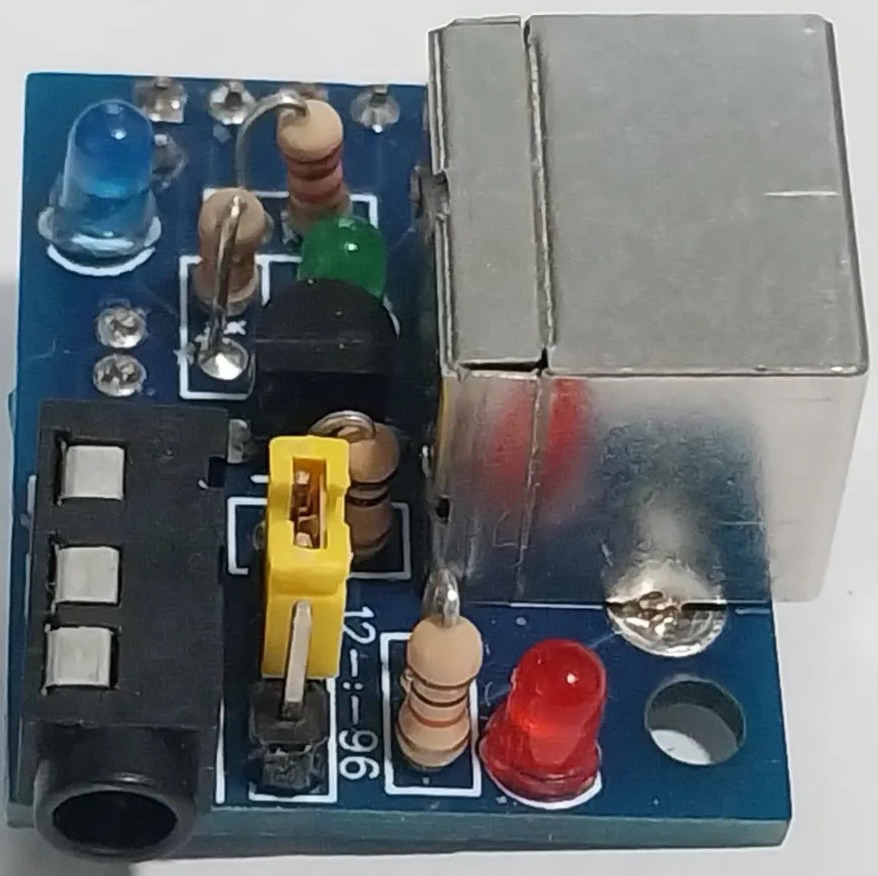
New Product - DigiPi Radio Interface Board
From Randy Robinson N7EBB:
I now have DigiPi Radio Interface Board kits and assembled and tested units available for sale.
All info on this board is on my new website: n7ebb.org. I’m currently sold out, but I have components and boards on order.
Note that a small bit of soldering is necessary even with the assembled and tested units - 3 wires need to be soldered to the (required) Fe-Pi audio board.
Craig Lamparter KM6LYW reviewed the DigiPi Radio Interface Board on his YouTube channel and clearly he was impressed: