Zero Retries 0102
2023-06-09 — SEA-PAC 2023, Amateur Radio Adjacent Technologies - LoRa, Jeff Geerling KF0MYB
Zero Retries is an independent newsletter promoting technological innovation in Amateur Radio, and Amateur Radio as (literally) a license to experiment with radio technology.
About Zero Retries
Steve Stroh N8GNJ, Editor
Jack Stroh, Late Night Assistant Editor Emeritus
In this issue:
Web version of this issue - https://www.zeroretries.org/p/zero-retries-0102
Request To Send
Editorial by Steve Stroh N8GNJ
This week is sandwiched between our return from SEA-PAC and a major event at our household in ten days, and significant preparations for that event. Compensating mightily for that time crunch is some of the nicest Western Washington weather I can remember for early June - sunny, dry, slight breeze, and temps in the 70s. This weather is as close to heaven as I can imagine. Somehow… (we are blessed!) the smoke from wildfires in British Columbia has not come South (yet).
Thus as I put together another issue without much time for editing, this quote from Mark Twain comes to mind:
I didn't have time to write a short letter, so I wrote a long one instead.
Thus the same note applies - this issue will overflow your mailer, so just go to the web page for this issue.
And, sadly, still not enough time to follow up on comments and email feedback here in Zero Retries. My apologies folks!
SEA-PAC 2023
By Steve Stroh N8GNJ
There weren’t any stunning Zero Retries Interesting developments to report from SEA-PAC 2023 in Seaside, Oregon this past weekend, but there was a fair amount of “Zero Retries Interesting”.
The Icom IC-905 is now real enough that it’s no longer being isolated “under glass” in the Icom booth, and I actually got to do some button-poking on the demo unit.
While I have a few quibbles about Icom’s choice of features such as FSTV (Analog Amateur Television) rather than Digital Amateur Television, Digital Data (DD) mode (128 kbps) hasn’t been improved for two decades now aside… credit where due. Icom conceived, and is now shipping, a new paradigm in Amateur Radio with the IC-905 as an integrated unit that combines 144 / 440 / 1200 / 2300 / 5600 MHz capability. I think that eventually, I’ll have to invest in one to thank Icom for making such significant investment in Amateur Radio’s VHF, UHF, and microwave bands. Hopefully, with Icom’s demonstration of a market for such a radio, the IC-905 will be the first of a number of such units.
I enjoyed browsing the FlexRadio booth and dreaming a bit, and of course, putting in my usual plea for a FlexRadio unit with native VHF / UHF capability. I don’t think I actually said “If Icom can do it…”, but I was certainly thinking it.
Later, in sitting through the FlexRadio’s seminar, I had a mini-revelation that Icom (and most other manufacturers of high-end Amateur Radio units) just haven’t quite made the transition into to the era of Software Defined Radio (SDR). FlexRadio does get SDR; FlexRadio builds their hardware in service to the software. Icom and the others, on the other hand, regard software as in service to the hardware.
Icom seems to view software as a way to fix bugs, where FlexRadio views software as a way to add features. To FlexRadio, most of the product is the software1.
At least, that’s the way it seems to me.
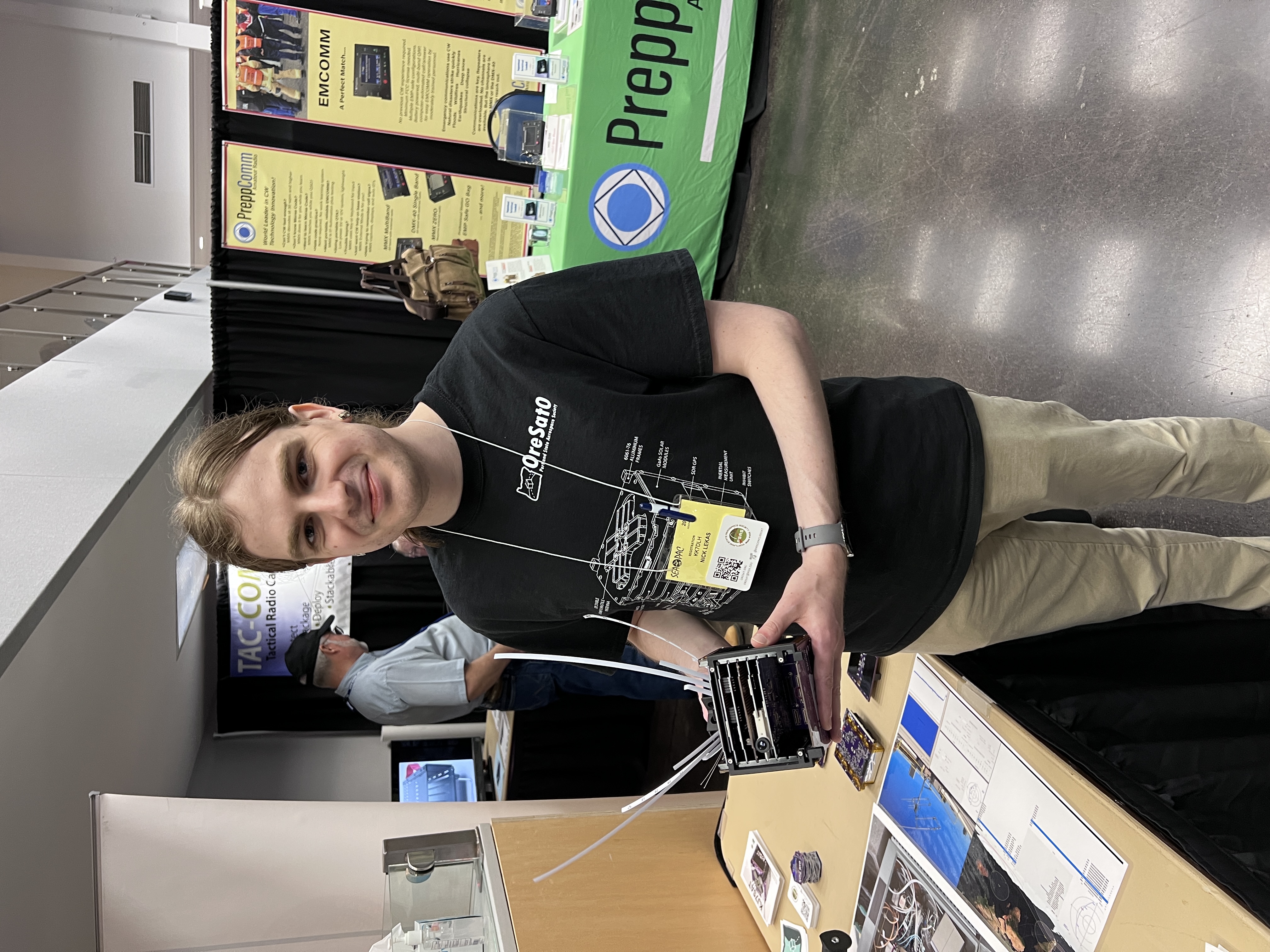
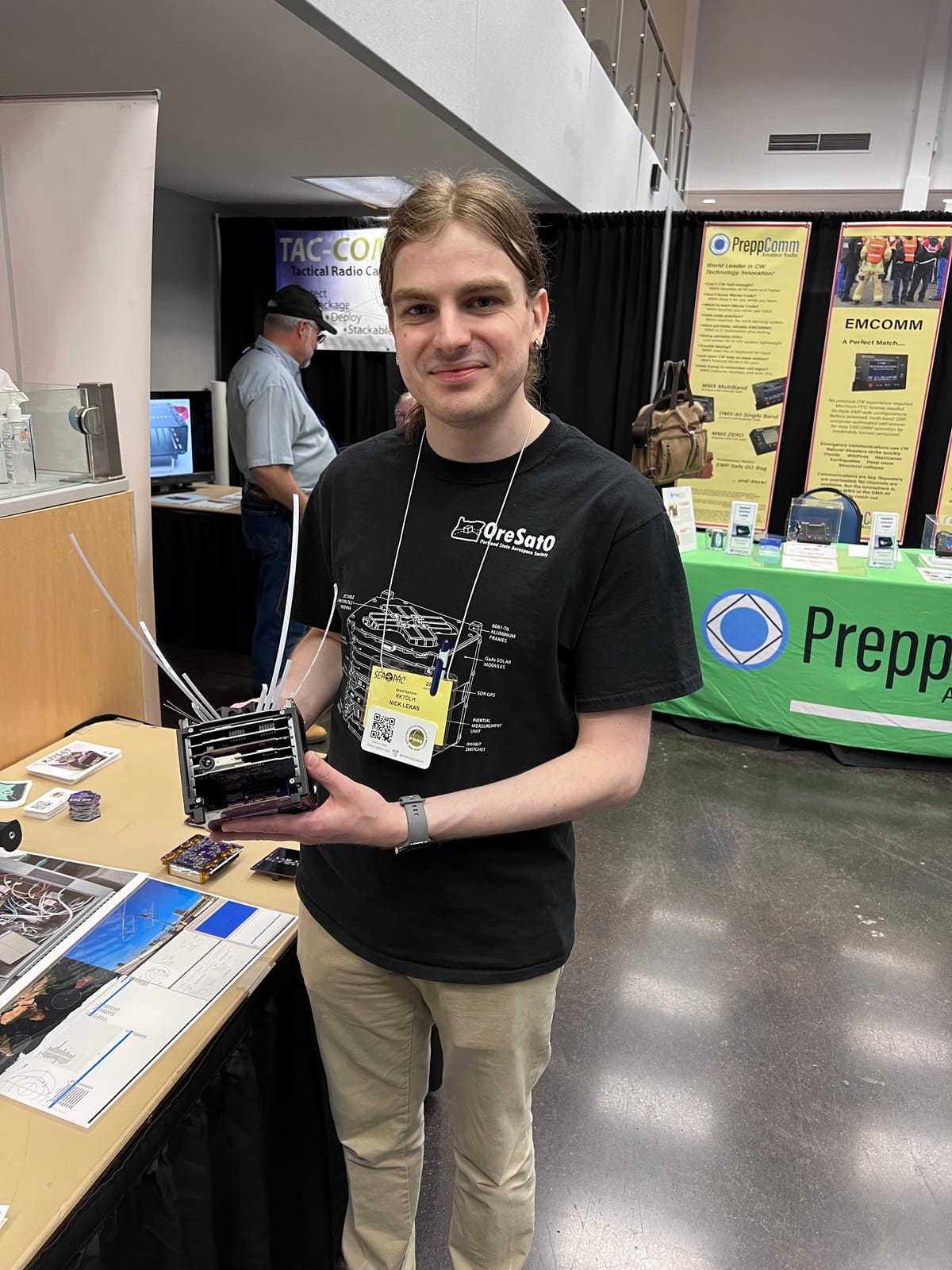
The most interesting thing I saw, and discussion I had at SEA-PAC was a model of OreSat0, ably explained by Nick Lekas KK7DLH of Portland State University who answered my questions with considerable depth of knowledge, including PSU’s planned follow-on satellites. I can’t explain how refreshing that conversation with KK7DLH was… in an entire convention center filled with “Same Old, Same Old” Amateur Radio.
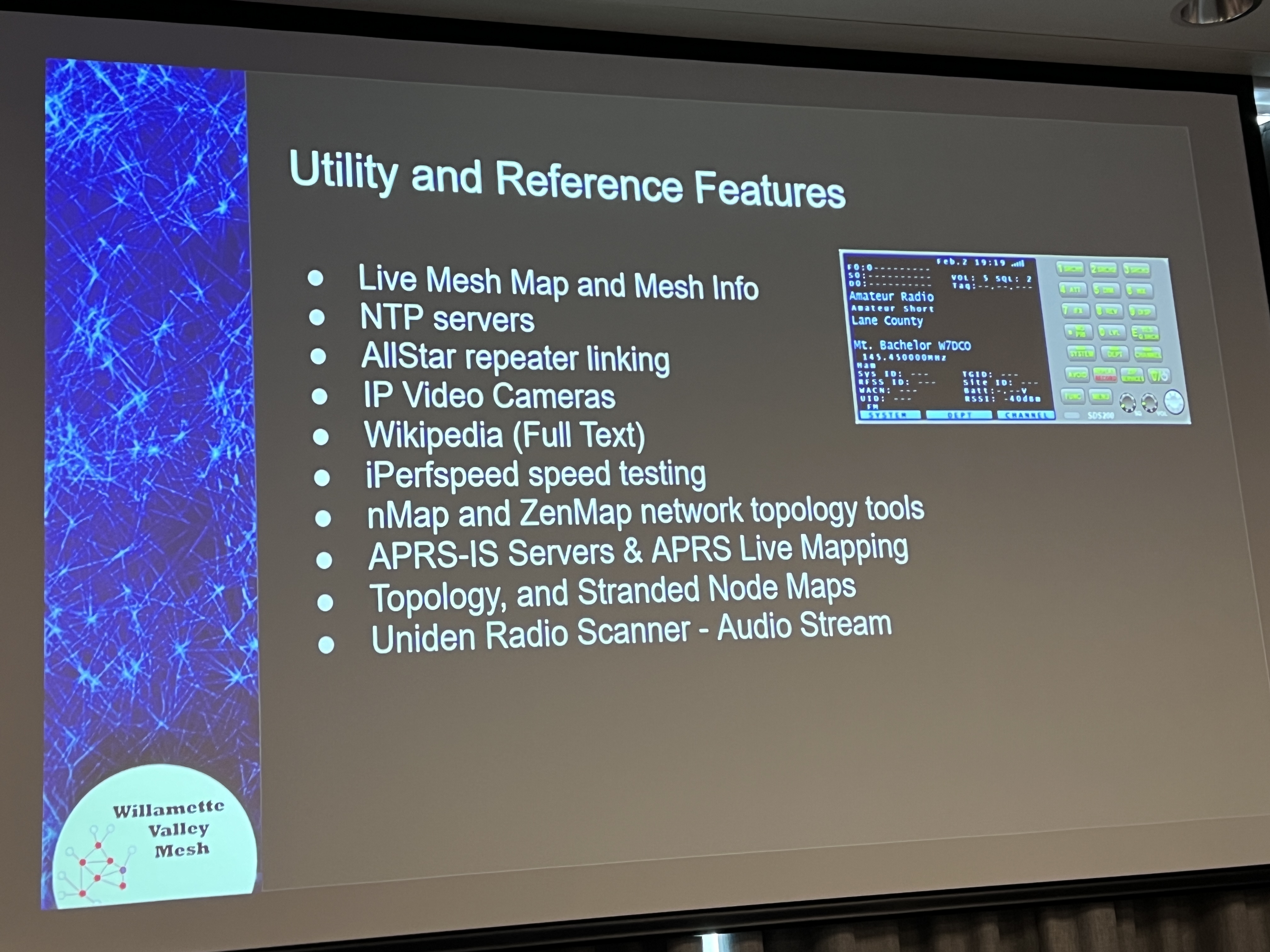
Second to my conversation with KK7DLH was an interesting ad-hoc presentation (the scheduled presenter couldn’t make it to SEA-PAC 2023) from two representatives (unfortunately I didn’t record their names) of Willamette Valley Mesh Network. Wow… that is quite a network, and what impressed me most was the wide range of services / servers that are accessible on the network. A few of the coolest services mentioned were a seismograph, a lightning detector, and a Citadel BBS.
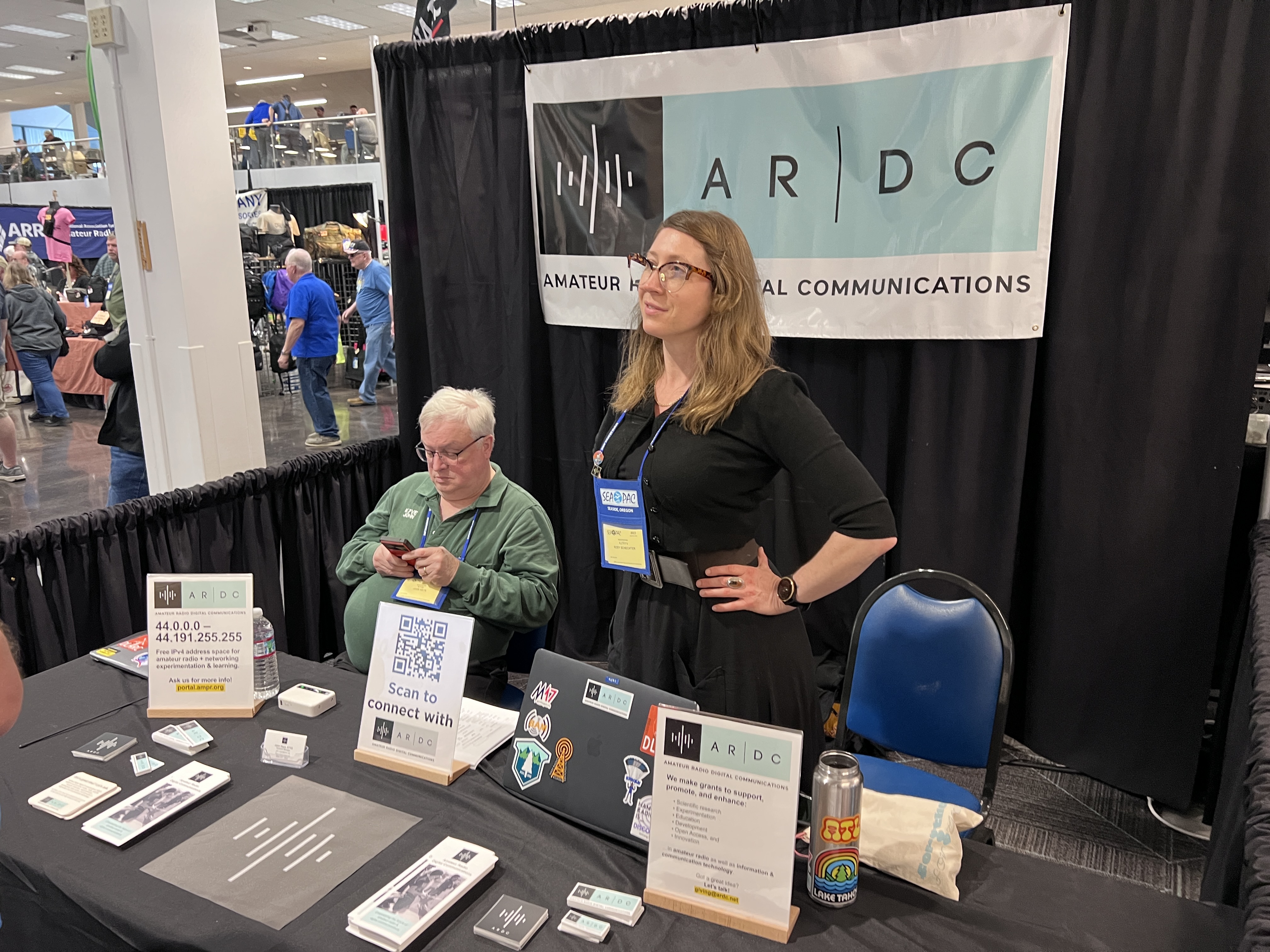
It was fun to check in with Rosy Schecter KJ7RYV, ARDC’s Executive Director and old friend John Hays K7VE, ARDC’s Outreach Director at ARDC’s booth. There was a notebook with an update about MIT’s Big Dish refurbishment project (apparently, the refurbishment is mostly complete2), which triggered my usual plaint to KJ7RYV that to date, ARDC isn’t doing a very good job of following up to the public about the outcomes of ARDC’s grants - such as the $1.6M grant to MIT3. KJ7RYV said that she understood my plaint, and hopefully ARDC will do better in the future with a new Communications Director (to be determined - soon).
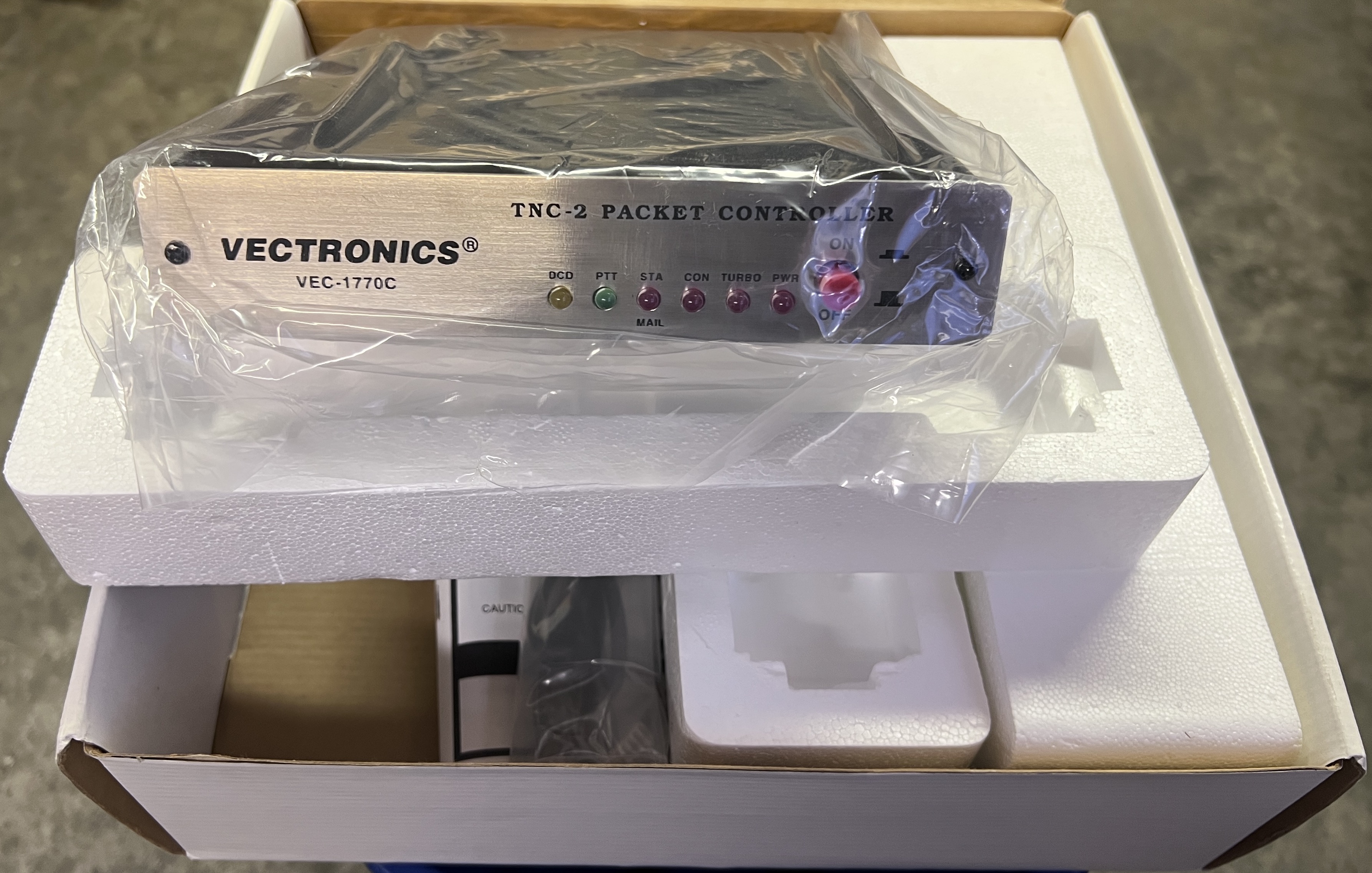
Lastly, of course I made the rounds of the flea market tables at SEA-PAC and my best acquisition was a new old stock Vectronics4 VEC-1770C Terminal Node Controller (TNC). This is the same unit as an MFJ 1270C, based on the TAPR TNC-2. The VEC-1770C is “brand new”, all still in original wrappings… just decades old now. I haggled a bit and bought it for $20. The VEC-1770C is destined for the “Living Packet Radio Project and Museum” (still in the planning stages) here at N8GNJ Labs.
Thoughts on Amateur Radio Adjacent Technologies - LoRa
By Steve Stroh N8GNJ
Amateur Radio isn’t the only “hobby / experimenter” route to learning about radio technology. LoRa has become a very popular entry point to radio technology experimentation, but such alternatives aren’t being recognized in Amateur Radio.
I had a conversation at SEA-PAC 2023 that surprised me. I was talking to a very knowledgeable Amateur Radio Operator, and I mentioned that young techies that are experimenting with radio technology are increasingly using LoRa technology to build mesh networks in lieu of getting an Amateur Radio license and experimenting within Amateur Radio.
To my surprise, this knowledgeable Amateur Radio Operator said that they had not heard of LoRa or creating mesh networks out of LoRa nodes.
While LoRa isn’t “Amateur Radio” technology, it is fast becoming the defacto technology for techies that want to experiment with data communications over radio. There are good reasons to choose LoRa:
It’s inexpensive5,
It’s natively data communications - no analog radio + modem is needed,
It’s pretty easy to get started,
It doesn’t require a license as LoRa units are available for the US license-exempt 902-928 MHz band6,
Because there’s no Amateur Radio license involved, there are no issues about “appropriate content”, encryption, etc.,
It works - the Chirp Spread Spectrum modulation is robust, and interference / contention doesn’t seem to be an issue,
There’s ample support, documentation, inspiration, etc. for experimentation, including from hobby / maker vendors such as Adafruit and SparkFun Electronics,
There’s ample peer-to-peer support, especially if you have a friend within a mile or so.
But as the knowledgeable Amateur Radio Operator illustrated, there’s a significant “blind spot” in Amateur Radio about technologies such as LoRa and especially how they’re “competing” for the attention of those who are technically curious.
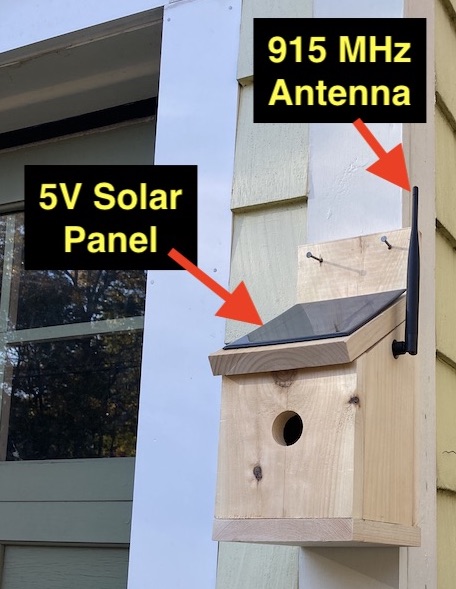
For example, I just read about the WARS LoRa Birdhouse Project which is an admirable project in putting together a public mesh network based on LoRa, but the project’s principals are woefully misinformed about the realities of the 902-928 MHz band:
The 33cm ham band (902-928 MHz) is used given that this is an experimental technology. All nodes must be installed/operated by FCC licensed amateur/ham radio operators.
Thus the developers of this network are excluding techies who might be interested in experimenting with radio technology, but are not Amateur Radio Operators. That’s… unfortunate… and shortsighted, in my opinion.
To be clear, 902-928 MHz can be used by anyone using license-exempt devices under FCC Part 15 regulations (low power, etc.). The builders of the WARS LoRa Birdhouse Project are certainly within their rights in operating their network to require an Amateur Radio license… but an Amateur Radio license is not required to use 902-928 MHz. For example, even mighty Motorola Solutions takes advantage of 902-928 MHz being license-exempt with their DTR 620 portable radio.
Update 2023-10-20
My thanks (and apologies) to Bruce MacKinnon KC1FSZ, the creator of the WARS LoRa Birdhouse Project, for an exchange of graceful emails pointing out some errors on my part in the above four paragraphs (now denoted in italics).
My apologies to Bruce MacKinnon KC1FSZ - he was not “woefully misinformed”.
One error on my part was that in reading KC1FSZ’s statement:
All nodes must be installed/operated by FCC licensed amateur/ham radio operators.
I created an inferred statement in my mind of:
All nodes operating in 902 - 928 MHz must be installed/operated by FCC licensed amateur/ham radio operators.
That isn’t what KC1FSZ said, nor what he meant.
That became clear upon re-reading the project’s GitHub page more thoroughly, and noticed this explanation:
Do I Need To Be A Ham To Use The Network?
Yes. The radio module we are using is not Part 15 certified so it must be run using Part 97 (amateur) rules. We are currently doing research on a non-ham ISM Part 15 version of the network to make it easy for non-licensed users to join the fun.
Not seeing that in my initial reading was another error on my part.
As I explained to KC1FSZ in our email exchange, I was reasonably sure that the radio module used in the project would have FCC Part 15 certification as it’s a product of Semtech (a reputable manufacturer). But, I was incorrect - the module in question is not Part 15 certified. While the module in question is designed to be fully compliant with the FCC Part 15 regulations, it’s intended to be embedded into products, (not a complete system by itself). Thus the eventual product, incorporating the radio module, would have to be FCC Part 15 certified before it can be offered for sale (which would be usable by anyone).
KC1FSZ, using that module in a system intended to be used by Amateur Radio Operators, in Amateur Radio spectrum (see below), within the FCC Part 97 rules, does not require that the module be certified.
That’s because of the quirk of spectrum policy in the US that 902-928 MHz is simultaneously:
- One of the Industrial, Scientific and Medical (ISM) bands where (Part 15 certified) devices can be operated by anyone, and
- Also the Amateur Radio 33cm band. Thus Amateur Radio Operators can use equipment intended for Part 15 operation, outside the limits imposed by Part 15 (low power levels, etc.).
I’ll also note that KC1FSZ, in specifying that only Amateur Radio Operators can build and operate a node (incorporating the module in question), KC1FSZ is adhering scrupulously to the FCC rules. Most hobbyist (and some commercial) users of such modules aren’t that scrupulous and use such radio modules with no concern for the legalities.
(End of Update 2023-10-20)
A second example of experimenting with radio technology apart from Amateur Radio is the rising popularity of General Mobile Radio Service (GMRS) which provides most of the “voice chatting on an Amateur Radio UHF repeater” experience… without Amateur Radio. Granted that the “experimentation” is mostly social, as in talking via (wide area) radio. Yes, it’s understood that a GMRS license is required, but that’s easily accomplished for $35 and a few minutes of time at the FCC website. Using GMRS does not require studying in order to answer arcane7 technical and regulatory questions, or having to understand Amateur Radio culture to be comfortable talking on a repeater.
A third example is SatNOGS - an “Open Source global network of satellite ground-stations“. Because a SatNOGS station is receive-only, no Amateur Radio (or other) license is required. But building a SatNOGS station is a great project for curious techies for experimenting with radio technology. TinyGS is much the same as SatNOGS; it fuses LoRa and a simplified receive-only ground station to receive LoRa telemetry transmissions from experimental satellites.
In conclusion, much like operating Citizen’s Band equipment in the 1970s exposed many people to the fun of experimenting (and socializing) with radio which became a pathway to Amateur Radio, in this era, LoRa, CBRS, and SatNOGS can be similar pathways to Amateur Radio…
… but only if Amateur Radio is cognizant of those technologies / systems and provide a welcoming environment to those experimenting with radio technology.
Jeff Geerling (of Raspberry Pi Fame) is now KF0MYB
By Steve Stroh N8GNJ
Jeff Geerling - a prominent YouTuber specializing in interesting Raspberry Pi projects, just got his Amateur Radio license.
With a modest post on Mastodon:
I am a ham.
Jeff Geerling announced his interest in Amateur Radio. I’ve been a fan of Geerling for some time, so I immediately fired off an email:
With as much enthusiasm as this…