Zero Retries 0083
2023-01-27 - The Antenna(s) Problem, Microblogging via Amateur Radio
Zero Retries is an independent newsletter about technological innovation in Amateur Radio. Zero Retries promotes Amateur Radio as (literally) a license to experiment with radio technology.
About Zero Retries
Steve Stroh N8GNJ, Editor
Jack Stroh, Late Night Assistant Editor Emeritus
In this issue:
- Request To Send
- The Antenna(s) Problem
- Microblogging via Amateur Radio
- ZR > BEACON
- Updata
- Feedback Loop
- Join the Fun on Amateur Radio
- Closing The Channel
Request To Send
Typos - Post Publication Cleanups
Typos - I’ve had a few… As well as misstatements, missing words, etc.
One of the features of Substack’s system is that creating content there generates email newsletters (its primary purpose) and a blog post (including an RSS feed for us RSS users).
Like you, I read Zero Retries as an email after it publishes at 15:30 Pacific each Friday. Inevitably, in the email version, I spot typos, misstatements, missing words, etc. which I usually fix on the web version of that issue. It’s worth the trouble of doing so as eventually these issues will get archived including my promise to DLARC to create PDF versions that can be archived there.
Ria Jairam N2RJ Sanction by ARRL Board
Regarding my Zero Retries 0082’s Request To Send regarding the ARRL Board’s sanction of ARRL Hudson Division Director Ria Jairam N2RJ, I had a series of email exchanges with my ARRL (Northwestern) Division Director Mike Ritz W7VO. Our email exchange wasn’t on the record, but I’ll summarize W7VO’s position (my words) as “for better or worse, decision made, moving on”.
In our email exchange, I said, in part:
In the end, the fallout of that bad decision is going to hurt ARRL. Perhaps it will hurt minimally, or it may hurt severely - too soon to tell.
…
The ARRL Board is on the wrong side of history on this issue - it's being hyper protective and insular when it should be looking at the bigger picture.
One cuts to the heart of the matter statement to an ARRL Director that I was copied on:
The question that this incident raises in my mind, and presumably the minds of potential future ARRL members is: Is this really an organization that I want to be part of?
Good point! I’ve resigned my participation in other organizations not because I think my resignation could alter the organization’s decisions, but simply because my conscience wouldn’t permit me to remain involved, even passively, as in Not in my name, you don’t! Thus it will be an interesting moment in a few months when I receive the annual notice that my ARRL membership is about to expire. I’ll let you know what I decide.
Personal DLARC Update
Four more boxes (thirteen to date) of Amateur Radio media left the N8GNJ Labs archives this week on the way to the Digital Library of Amateur Radio & Communications.
de Steve N8GNJ
The Antenna(s) Problem
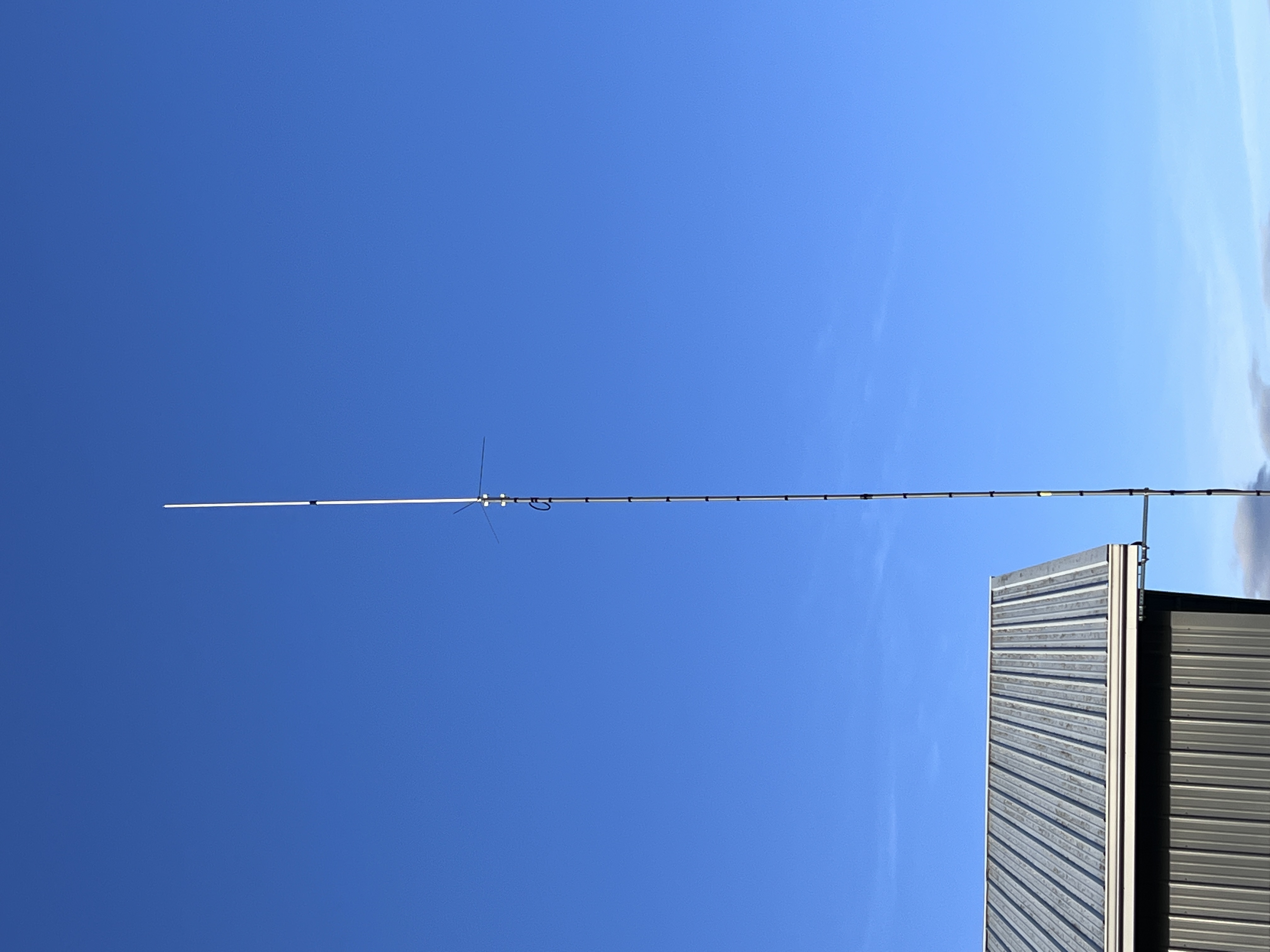
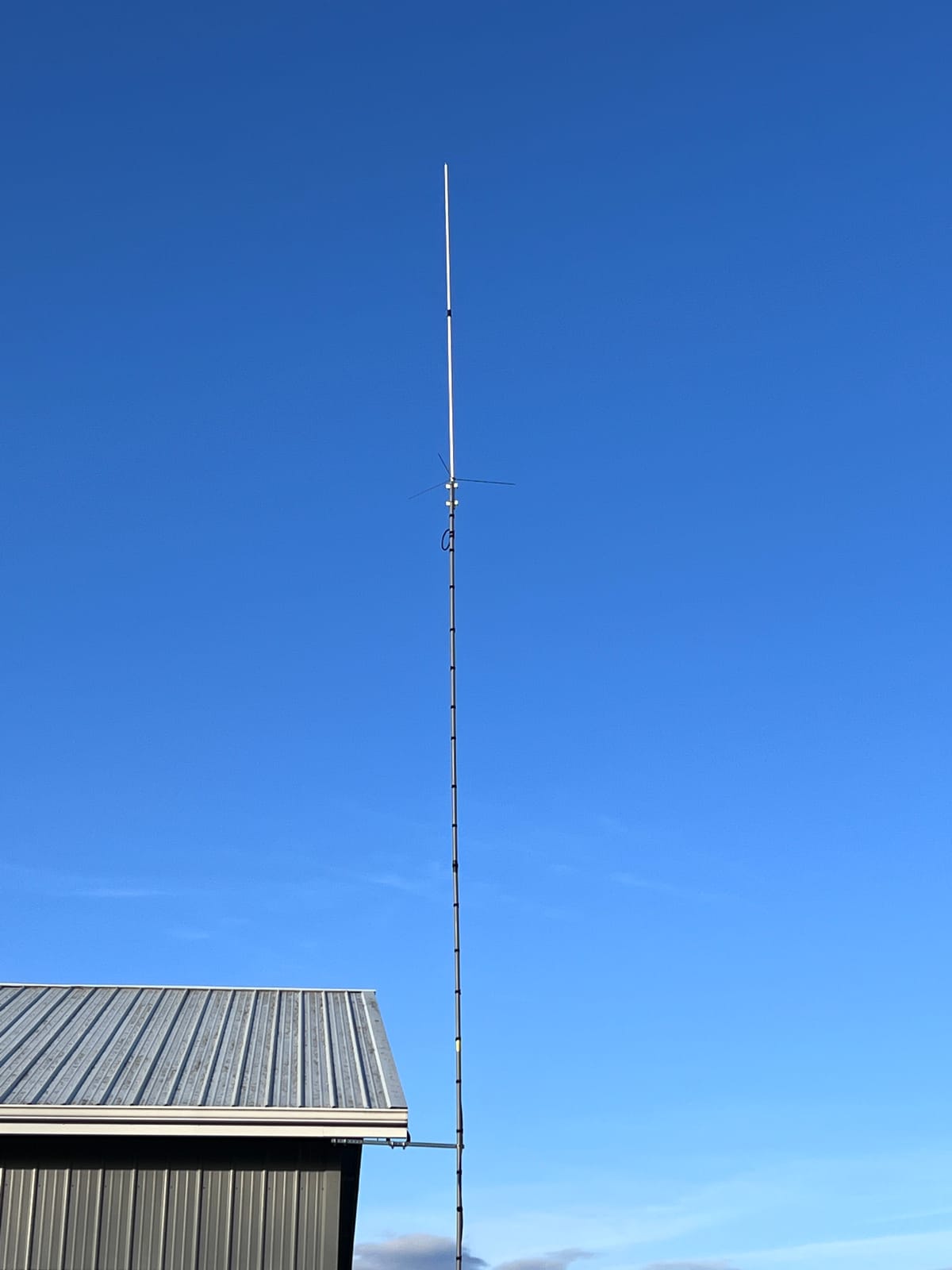
As much as I love experimenting with radios, and especially data communications over radio, to me, dealing with antennas is merely a necessary evil. Thus I get that it’s tempting to put most of one’s “radio experimentation” efforts into the radio, rather than the antenna. But, eventually you learn that in an optimally functioning radio system, a reasonable antenna, installed reasonably high and in the clear, is generally more important1 than the radio .
Amateur Radio Operators of a certain vintage take it for granted that our Amateur Radio stations require multiple antennas to accommodate various radios of differing functionality. But that seemingly mundane “fact” is a huge differentiation between older Amateur Radio Operators and new Amateur Radio Operators. The latter rightly say “How do I put an antenna up into the air?” Unstated, but implied is “How do I do it safely, with minimal long term impact to my apartment / condo / house?”.
“Back in the day”, “antenna / tower parties” were common. A small group of one’s Amateur Radio buddies would gather at the home where the new antenna / tower is needed. Some nimble person would do the difficult work of getting an antenna mounted on the roof, or erecting a tower and then installing an antenna onto the tower. The rest were ground crew - tugging on ropes, keeping an eye out for dangerous obstacles, keeping the beer cold, cooking the burgers, etc.
My perception is “antenna / tower parties” are mostly a thing of the past. The tribal knowledge of “antenna / tower parties” is rapidly aging out of the Amateur Radio population. Another understandable factor is that there is inevitably a significant risk of someone injuring themselves on your property and the possibility of lawsuits and denied insurance claims - putting up “structure” can argued to be a job for professionals.
I recently had breakfast with a small group of Amateur Radio Operators, and I mentioned that I finally got a new antenna, with new feedline, 30 feet in the air, and it was barely doable by me on a ladder with my wife assisting me on the ground. As the conversation turned to my accomplishment, all seven of us confessed to each other that our days of scampering up towers and roofs, and ladders were behind us. Admittedly, with various medical issues, I should not have been on a 10 foot ladder… but I really wanted to be back on the air for VHF and UHF.
I’ll have a full description of my new antenna project, detailed descriptions of what I used, including photographs, on my n8gnj.org blog as soon as the project is complete. Routing the coaxial cable to the radio area in N8GNJ Labs remains to be done.
Once the antenna was in the air, I had a blinding moment of clarity (Part 1) - it was hard work to get that one antenna 30 feet into the air. Keep in mind that in my area, Whatcom County, Washington, 60 mile per hour (MPH) winds occur. I think I’ve done a reasonable job securing this 30 foot antenna pole, but I won’t know until the winds test my installation.
As my attention turned to the next task of routing the coaxial cable I began thinking… what radios will I connect to that coax? My new antenna is a Comet CX-333 "tri-bander" - 144 / 222 / 440 MHz2, so I could connect three different radios to it. But which radios?
Then it was time for blinding moment of clarity (Part 2) - if the decision of what radios to connect to my (currently) one antenna is hard for me, what must such a decision be like for a new or prospective Amateur Radio Operator? Here are some “what radio do I connect to my antenna” decision points:
DMR radio? There are lots of DMR repeaters these days, and all DMR radios can do FM, but DMR radios don’t have “flat audio” (“data”) connections to be able to do interesting higher speed data modes. DMR radios also require “code plugs” to be functional and the learning curve for code plugs and other DMR minutiae is steep.
FM radio? The Yaesu FTM-6000R that does have a “flat audio” connection to be able to do interesting higher speed data modes… but not DMR.
Few Amateur Radios these days are single-band, so your antenna connections have to accommodate both the 144 MHz and 440 MHz outputs of a 144 / 440 MHz radio3. If you use a triplexer to break out antenna connections for 144 / 222 / 440 MHz, you end up having to use a duplexer to take the single 144 / 440 MHz output on the radio into the 144 MHz port and the 440 MHz antenna port of the triplexer. Yes, complicated, and there’s some signal / power loss with all that conversion of the duplexer and triplexer.
And numerous other complicated radio decisions.
My choice of radios for this new 144 / 222 / 440 MHz antenna at this moment is4:
- 144 / 440 MHz - Kenwood TM-V71A. The 440 MHz section is mostly used for voice repeaters, and the 144 MHz section is used for data communications.
- 222 MHz - My venerable Icom IC-38A for voice repeaters.
I have single band 144, 222, and 440 MHz radios for data use that will eventually be installed in place of the above.
Returning to the difficulty of installing antennas… Antenna / tower parties aren’t impossible these days, they’re just tougher to organize, and more expensive. In my case, instead of merely springing for hot burgers and cold beers, an antenna / tower party will end up costing a few hundred dollars and will arrive on a trailer from an equipment rental store in the form of a scissor lift or telescopic boom lift. Heck… with those, perhaps antenna work might even be fun?
Nah, for me installing antennas is still just a necessary evil to experiment with radios.
But, with proper preparation, a scissor lift or telescopic boom lift will make short work of installing at least four more 30 foot antennas along the back of N8GNJ Labs in a day or two.
Postscript - Substack flagged this issue of Zero Retries as (!) Post too long for email. Thus, some severe editing was necessary to send this issue via email. If you’d like to see the article with all the original detail, it’s published on SuperPacket - Zero Retries 0083 - The Antenna(s) Problem.