Zero Retries 0059
2022-08-12 - Engineers on the Brink of Extinction Threaten Entire Tech Ecosystems, New ARRL Radio Lab Will Inspire Your Ham Shack!
Zero Retries is a unique, quirky little highly independent, opinionated, self-published email newsletter about technological innovation in Amateur Radio, for a self-selecting niche audience, that’s free (as in beer) to subscribe.
Steve Stroh N8GNJ, Editor
Jack Stroh, Late Night Assistant Editor Emeritus
In this issue:
- Pseudosponsor - Dire Wolf “soundcard” AX.25 packet modem / TNC and APRS encoder/decoder
- Request To Send
- Engineers on the Brink of Extinction Threaten Entire Tech Ecosystems
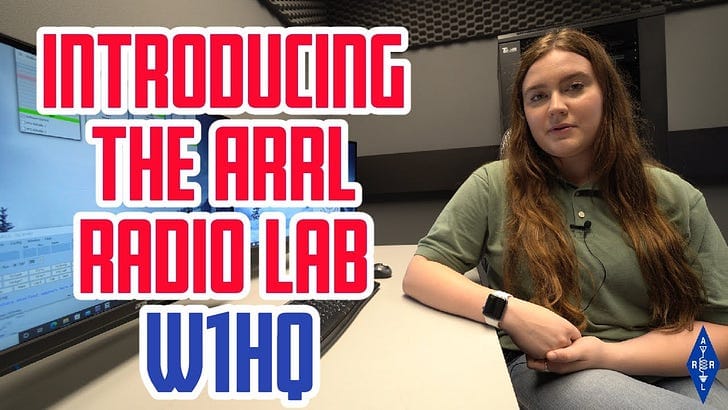
- New ARRL Radio Lab Will Inspire Your Ham Shack!
- Beware “Signal Enhancement Setting” on Windows 10
- ZR > BEACON
- Zero Retries Sponsorships
- Join the Fun on Amateur Radio
- Closing The Channel
This issue of Zero Retries is pseudosponsored1 by Dire Wolf “Soundcard” AX.25 packet modem / TNC and APRS encoder/decoder. If you have the rare software chops and a background in Amateur Radio data (packet radio) communications, in my opinion, Dire Wolf is the most vibrant, worthy-of-your-efforts open source project in Amateur Radio Data Communications. Dire Wolf is led (primary contributor) by John Langner WB2OSZ. Notably, Dire Wolf has implemented two forward error correction systems - FX.25 and IL2P, which moves Amateur Radio Packet Radio into new capabilities.
Request To Send
Countdown to Digital Communications Conference 2022 - September 16-18, in Charlotte, North Carolina, USA:10 09 08 07 06 05 weeks…
Countdown to DCC 2022 Paper submission deadline - September 1:~08 ~07 ~06 ~05 ~04 ~03 weeks…
This week had some major (time consuming) and urgent tasks that constrained my time to work on Zero Retries. As I put the finishing touches on this issue just a few hours before publication time at 15:30 Pacific, I’m a bit wrung out from sitting in front of the computer most of this week. This weekend is projected to be two more gorgeous summer days here in Bellingham, WA, thus I’m declaring a moratorium from my usual temptation to sit in my office working on Zero Retries. This weekend will be for catching up on a bunch of physical chores, including the “special project” I hinted at a few issues ago.
de N8GNJ
Engineers on the Brink of Extinction Threaten Entire Tech Ecosystems
Disclaimer - this story is only tangentially related to Amateur Radio (tied together, loosely, at the end of the story). If your focus is entirely Amateur Radio, skip to the next article.
The Register is a snarky, irreverent, sometimes humorous online publication, but sometimes it hits home, as it does with this piece.
Intel has produced some unbelievable graphs in its time: projected Itanium market share, next node power consumption, multicore performance boosts. The graph the company showed at the latest VLSI Symposium, however, was a real shocker. While computer science course take-up had gone up by over 90 percent in the past 50 years, electrical engineering (EE) had declined by the same amount. The electronics graduate has become rarer than an Intel-based smartphone. That part of the technology industry which makes actual things has always been divided between hardies and softies, soldering iron versus compiler, oscilloscope versus debugger. But the balance is lost. Something is very wrong at the heart of our technology creation supply chain. Where have all the hardies gone?
The entire article is worth reading. This situation has been known for decades now. In fact, the Raspberry Pi single board computers were created to address just this issue - declining interest in understanding actual hardware, rather than just learning software, with the hardware as an underlying abstract layer.
This issue is all the more poignant in the wake of the US The Chips Act of 2022 which allocates $54.2B for a number of programs relating to increasing the manufacturing of semiconductors in the US, including this Zero Retries Interesting item:
Public Wireless Supply Chain Innovation Fund: $1.5 billion through DOC National Telecommunications and Information Administration (“NTIA”), in coordination with NIST, the Department of Homeland Security, and the Director of National Intelligence, among others, to spur movement towards open-architecture, software-based wireless technologies, funding innovative, ‘leap-ahead’ technologies in the U.S. mobile broadband market.
Just one problem comes to mind…
Where are they going to get all the highly talented people that will be needed to make this initiative a reality?
One of the hidden vulnerabilities of semiconductor fabrication is that it requires incredibly (practically unbelievable) high levels of quality control. Semiconductor manufacturing is totally binary; either you do everything perfectly, all the time, or the output of the semiconductor fabrication plant is junk. You really, really gotta know what you’re doing! In the US there simply hasn’t been that much demand for engineers for semiconductor fabrication… thus we don’t have many (demand vs supply). The US does make chips - Intel’s biggest US fabs are in Portland, OR! But most of the knowledge of cutting edge semiconductor fabrication is in Taiwan; they’re ahead of Intel these days.
Bringing it back to Zero Retries Interesting - where are we going to get the engineers that grasp wireless well enough to create “leap-ahead technologies” cited in the Chips Act of 2022?
In some ways, the US is holding its own on wireless technology. One stellar example is Starlink - satellites, ground terminals, and infrastructure units all designed and manufactured in the US (and, of course, all launched from the US). Another bright spot is Qualcomm, headquartered in the US. Motorola is still around, having distilled itself down to Motorola Solutions providing public safety two-way radio systems. Of course, there’s FlexRadio Systems who started from an Amateur Radio “hobby project gone horribly wrong” to a supplier of radio systems to the US government. And the US Department of Defense could not fight without wireless technology.
But, the US no longer makes cell phones. Maybe that’s OK. At least we design them in the US (mostly - Apple). It seems to me that if we (the collective we, as in a collective effort of the US technology industry, US government, academia, etc.) don’t want radio technology development and infrastructure in the US to be eventually ceded by default to China because of the “pipeline” of radio technology specialists slowing to a trickle. If we don’t want that, we gotta start taking the slowing “pipeline” of radio technology specialists seriously by investing in deep understanding, competency and significant numbers of radio technology specialists.
This isn’t the first time the US had such a crisis in underinvestment in technology education. One of the first was the Sputnik Crisis.
[President Eisenhower] also noted the importance of education for the Russians in their recent scientific and technological progress, and for America's response to the Russians. He remarked, “we need scientists in the ten years ahead... scrutinize your school's curriculum and standards. Then decide for yourselves whether they meet the stern demands of the era we are entering.”
Amateur Radio can help the lack of radio technology specialists by giving them a head start in understanding radio technology… if we can get them interested in Amateur Radio. How? Aye, there’s the rub. There are a lot of independent efforts doing so. Amateur Radio Digital Communications (ARDC) has been active in this area by providing a diversity of grants such as:
- Grant: Fernwood Elementary HF/ ARDEN Station
- Jasmine and José Build a Radio Introduces School-Age Kids to the Science of Radio
- NRAO [National Radio Astronomy Observatory] Program Designed to Educate Emerging Generation of Scientists Using Amateur Radio
There is also the ARRL Education & Technology Program.
You get the idea.
I’ll publish the results of the poll in Zero Retries 0060.