Zero Retries 0018
2021-11-12 - A Couple More "Data" Radios, New Raspberry Pi OS
Advanced Amateur Radio - Data Communications; Space; Microwave… the fun stuff! Nothing great has ever been accomplished without irrational exuberance - Tom Evslin. Irrational exuberance is pretty much the business model of Zero Retries - Steve Stroh N8GNJ The Universal Purpose of Ham Radio is to have fun messing around with radios - Bob Witte K0NR. We are confronted by insurmountable opportunities! - Pogo
Steve Stroh N8GNJ, Editor
Jack Stroh, Late Night Assistant Editor
In this issue:
- Request to Send
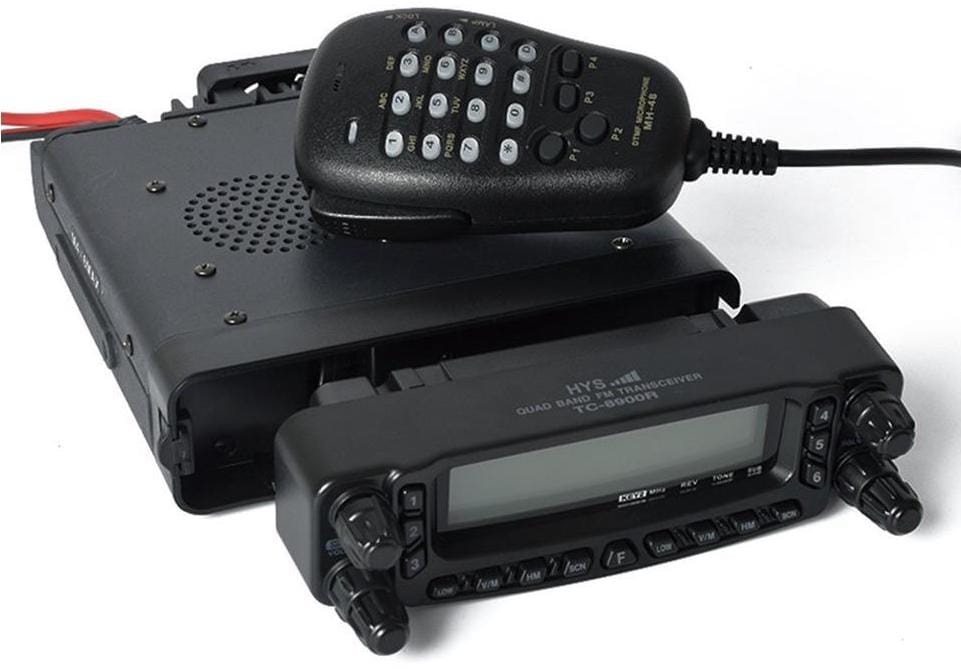
- HYS TC-8900R - 29 MHz, 50 MHz, 144 MHz, and 440 MHz “Data” Radio
- TYT TH 9000D Monoband Radios Can Be Modified for Data
- New Raspberry Pi OS - Bullseye
- More on Amateur Radio Backup Power
- ZR > BEACON
- Feedback Loop
- Contributors This Issue
- Closing The Channel
Request to Send
In my meanderings around Twitter in my guise as Zero Retries Newsletter, I came across this cautionary tale for Zero Retries: Russel Mooth K4HCK’s Amateur Radio Weekly. ARW seemed to be a nice newsletter of links to interesting Amateur Radio stories, but it ends abruptly at Issue 235 on 2019-03-30 with no hint of why that was the last issue. Food for thought. For the moment, writing Zero Retries is still some of the most fun I’ve ever had but I have many weeks to go before I begin to threaten K4HCK’s stamina.
I haven’t yet installed the Hisense 65” 4k television (discussed in Zero Retries 0017) as my main monitor in my office. It’s a big one, probably a two-person job, and I had some urgent writing to do including this issue of Zero Retries. Setting it up is in the “very soon” queue so that if it doesn’t work out, I’ll be within the Costco return window.
HYS TC-8900R - 29 MHz, 50 MHz, 144 MHz, and 440 MHz “Data” Radio
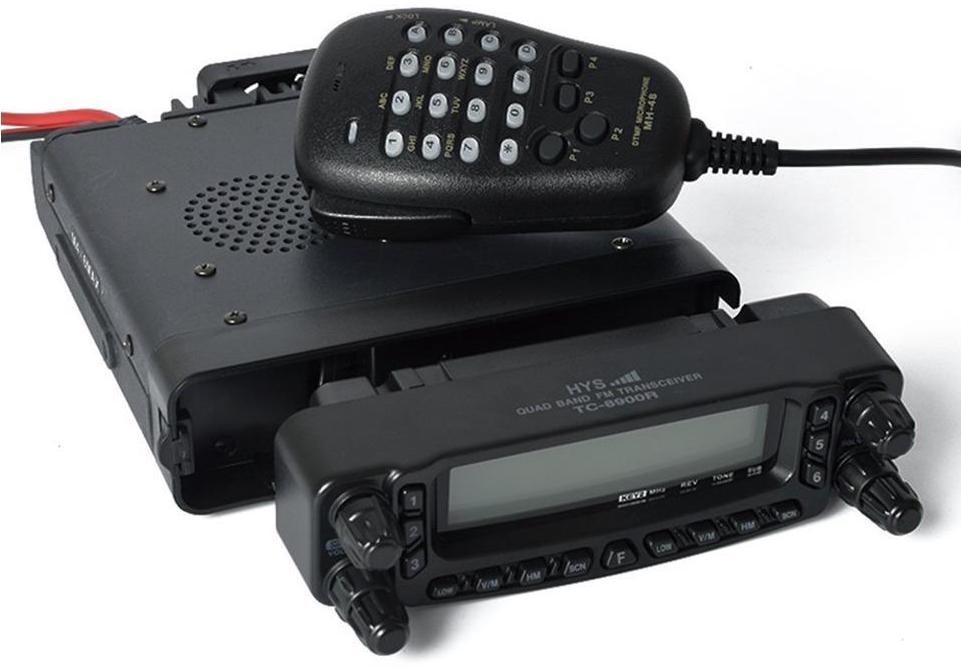
I recently became aware of the HYS TC-8900R because it has the rare combination of having the standardized “flat audio” 6-pin Mini-DIN (aka,”Data” connector) and coverage of the (US) Amateur Radio 50-54 MHz (6 meter) band.
It’s not that Amateur Radio bands, especially the 440-450 MHz band, are in danger of “getting full” for data communications, it’s that for some emergency communications situations, the ability to have multiple radios transmitting and receiving simultaneously is an increasing necessity. When, for example, you’re using multiple radios on the 144-148 MHz band, when one radio transmits, it effectively “jams” any other nearby radio in the same band. This can be overcome by applying radio frequency filters, but that negates the ability to change frequencies. Since Amateur Radio has multiple bands available, simultaneously operating on multiple bands is an “easy” fix. Easy as it doesn’t require filters, but it does require multiple antennas.
So the HYS TC-8900R is an interesting solution to that issue. You can do the same data communications on 50-54 MHz as you do with any of the other VHF / UHF Amateur Radio bands. Although the HYS-8900R can do 29 MHz, there are channel width restrictions in that band that limit data communications speeds, so it’s not quite so useful. Another issue with such radios is that it’s tough to “sort out” all four bands into one “quadplexer” to have antennas for all four bands connected simultaneously, thus it’s probably more practical to just use a broadband antenna such as a Diamond D130NJ “discone”.
The most “name brand” vendor I can find for this radio is… Newegg; price is $275 and shipping is “10 - 32 days, from China”. In this era, that seems fraught with peril.
I have no personal experience with this radio, and although it’s on my “I’m curious about it” list for potential investigation at N8GNJ Labs… it’s pretty low on the priority list. Thus I’d welcome reports from Zero Retries readers that have experience with this radio for data communications.
TYT TH 9000D Monoband Radios Can Be Modified for Data
Andy Sayler KF7VOL who is a friend and fellow instigator in Amateur Radio experimentation and progress here in Whatcom County recently chimed in on a mailing list discussion of data radios. KF7VOL pointed out that the TYT TH 9000D family of monoband radios is available from Amazon (no link - just search TH 9000D) for approximately $125, and all have very similar specifications, such as maximum transmit power of approximately 50 watts. There are three models (all claiming to be the same model - TH 9000D, distinguished only by the frequency range):
- RX: 136 - 174 MHz; TX: 144 - 148 MHz. FCC ID: PODTH-9000DV
- RX: 220 - 260 MHz, TX: 222 - 225 MHz. FCC ID: PODTH-9000DV2
- RX: 400 - 490 MHz, TX: 420 - 450 MHz. FCC ID: PODTH-9000DU
The interesting part is that apparently these radios are “easily” modified for data use, per this article - How to build a repeater from two TYT-9000 Mobile Transceivers - The “Aggrandizer” Project:
Dan (VA3OT) provided information about the TYT TH-9000, what he found was that “all the necessary connections needed to make a functioning repeater” was present on a 6-Pin board mounted socket:
Pin 1 - Ground
Pin 2 - TX Audio
Pin 3 - Carrier Operated Squelch (COS)
Pin 4 - RX Audio
Pin 5 - Push To Talk (PTT)
Pin 6 - +5 volts
Dan went on to state “The TYT TH-9000 has a plastic cover hiding a machined opening to fit a 9 pin serial port, complete with 2 threaded holes to mount a serial port”.
The “9 pin serial port” referred to is actually a 9-pin DSUB connector (nothing to do with “serial port”). Alinco uses a Female 9-pin DSUB on some of their radios. If you do this modification and wire it the same as Alinco radios, you can use the Masters Communications Model Alinco-6 adapter for a plug-and-play conversion to the standard 6-pin MiniDIN connector. The email version of this newsletter incorrectly suggested the use of the Model DIN-6 adapter, which is similar.
This is an interesting development (to me; this info has apparently been available since 2014). For the low cost of these radios, and the apparent ease of modification to get a data radio that may well work for high speed data communications like 9600 bps packet radio and VARA-FM Wide, these radios will soon find their way somewhere in the middle of the priority list at N8GNJ Labs, especially the 222-225 version. They seem inexpensive enough to buy multiple units and do the conversion on multiple units.
New Raspberry Pi OS - Bullseye
Simon Long for Raspberry Pi Foundation, 2021-11-08:
Every two years, Debian Linux, on which Raspberry Pi OS is based, gets a major version upgrade. Debian ‘buster’ has been the basis of Raspberry Pi OS since its release in 2019, and Debian ‘bullseye’ was released in August. (As some of you may know, Debian names their versions after characters in Disney / Pixar’s Toy Story films – Bullseye was Woody’s horse in Toy Story 2.)
We’ve been working on the corresponding ‘bullseye’ release of Raspberry Pi OS; it’s taken a bit longer than we’d hoped, but it is now available.
So what is new this time? Debian ‘bullseye’ has relatively few major changes which are visible to users – there are some under-the-hood changes to file systems and printing, but most of the changes are patches and upgrades to existing applications and features. However, over and above the changes in Debian itself, the ‘bullseye’ version of Raspberry Pi OS has a number of significant changes to the desktop environment and to the support for Raspberry Pi hardware.
I had never made that connection on the name of the Raspberry Pi OS, but then I had to look up to see who “buster” was in Toy Story:
Buster is a dachshund in the Disney / Pixar Toy Story film series who formerly belonged to Andy Davis, who received him as a puppy for Christmas at the end of the first film, but made his first full appearance as a grown-up dog in the second film and grew old in the third film.
Now you know too 😊
In my reading, there is only one significant new feature in bullseye - the video driver is now “KMS (kernel modesetting)” rather than the previous a proprietary “blob” (my inexpert understanding) that could not be accessed by other software running on a Raspberry Pi. I’ve seen the issue about video drivers for Raspberry Pi not being open source as a knock against the Raspberry Pi, and apparently that’s no longer an issue. Us regular users of Raspberry Pi OS will likely never know, or care about this now-former issue, other than video will likely work better in the coming years.
One visible new feature of bullseye is a built-in Updater; if your Raspberry Pi is Internet-connected, it will now “phone home” to see if there are updates available, and notify you if there are - click to update. I think that’s generally a good thing for the majority of users, but there are probably some that won’t like it. At least it’s not the “you vill be updated!” approach of another popular operating system.
Long explains that it’s generally not a good idea to try to update an existing installation for a new major version of the OS; start from scratch with the new OS and add your customizations to the new OS.
The biggest news, to me, is that Raspberry Pi OS remains 32-bit. In a comment following the article, Long said:
In all our testing and benchmarking, 64-bit doesn’t offer any significant speed advantage in the majority of typical use-cases.
Fair enough - 32 bit works fine… it’s just that “64 bit”, especially on a $35 or $70 computer is cooler.
But wait… there’s more!
Bullseye bonus: 1.8GHz Raspberry Pi 4
But some of you may have noticed another upgrade. Users with recent Raspberry Pi 4 devices will find that their default turbo-mode clock has increased from 1.5GHz to the 1.8GHz used on Raspberry Pi 400. “Recent” in this case means any 8GB Raspberry Pi 4, or a 2GB or 4GB board with the extra components circled in the image below. This is the dedicated switch-mode power supply (“switcher”) for the SoC core voltage rail, and was introduced when we shuffled the allocation of switchers to rails to support 8GB.
One minor issue I’ve noticed with the Raspberry Pi 400 I use at the Bellingham Makerspace is that graphics-heavy web pages, driving two monitors, isn’t exactly snappy even with the RPi 400’s 4 GB of RAM. Perhaps trying out the overclocking might fix that issue - the 400 has a very large heat sink so there’s no danger of overheating the CPU. I might also try the 64-bit version (still experimental) - it’s just another micro SD card.
More on Amateur Radio Backup Power
The discussion topic at this week’s Mount Baker Amateur Radio Club’s general meeting was backup power. Here are some pointers to some good info that came out of that discussion.